Eye & Vision Issues in Hedgehogs
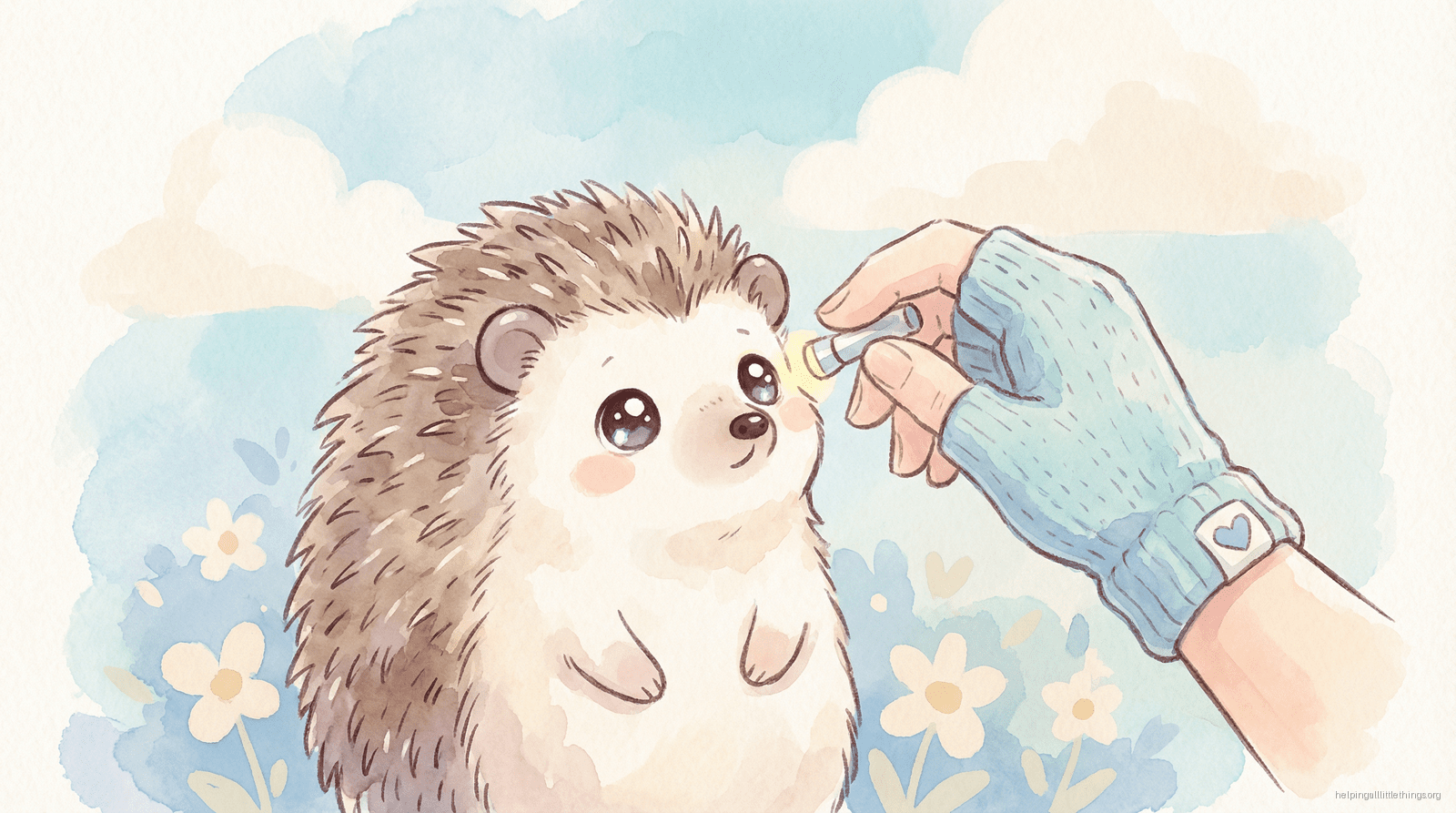
Share this infographic:

A hedgehog's eyesight is not their strongest sense; they rely much more on their acute sense of smell and hearing to navigate their world. However, their prominent, somewhat bulging eyes are susceptible to injury and infection. Healthy hedgehog eyes should be bright, dark, and clear. Any deviation from this, such as swelling, discharge, or cloudiness, requires attention.
Common Eye Problems
-
Eye Infections & Conjunctivitis:
- Cause: An infection can start if a hedgehog gets debris in its eye, such as a piece of dusty bedding or dirt. A dirty cage environment can also harbor bacteria that can lead to infection.
- Signs: The most common sign is an eye that is swollen and held shut, often with a crusty discharge that seals the eyelids together. The surrounding tissue may be red and inflamed.
- Action: This requires a veterinary visit. The vet will prescribe a hedgehog-safe antibiotic eye drop to clear the infection. It is important to gently clean away any crust with a warm, damp cotton ball, but do not force the eye open.
-
Corneal Ulcers & Injuries:
- Cause: Because their eyes are prominent, hedgehogs are prone to scratching the surface of their eye (the cornea). This can happen on a sharp piece of bedding, a cage accessory, or even from a stray quill.
- Signs: The hedgehog will be in obvious discomfort, keeping the eye tightly closed. The eye may look cloudy or bluish and will be tearing excessively.
- Action: This is an emergency. An untreated ulcer can become infected and lead to the loss of the eye. A veterinarian will diagnose the ulcer with a special stain and prescribe medicated eye drops to allow it to heal.
-
Proptosis (Eye Prolapse):
- Cause: This is a traumatic and severe condition where the eyeball pops out of its socket. It can be caused by excessive pressure during improper restraint, head trauma, or sometimes from a severe infection or tumor behind the eye pushing it out.
- Action: This is a dire emergency requiring immediate veterinary attention. If this happens, the eye must be kept moist with a sterile saline solution or eye lubricant. The vet will assess if the eye can be saved and replaced in the socket. In many cases, the damage is too severe, and the eye must be surgically removed (enucleation) to relieve pain and prevent further complications.
-
Cataracts & Age-Related Changes:
- Cause: Like many animals, hedgehogs can develop cataracts (a clouding of the lens) as they get older.
- Signs: A white or opaque spot will appear in the center of the eye, leading to gradual vision loss.
- Action: Hedgehogs adapt very well to blindness, relying on their other senses. No treatment is typically needed for age-related cataracts, but a vet should confirm the diagnosis.
Prevention
- Use Safe Bedding: Choose a low-dust bedding like fleece or a paper-based product to minimize the risk of eye irritation.
- Ensure a Safe Cage: Check the cage for any sharp edges or points that could cause an injury.
- Proper Handling: Learn how to handle your hedgehog safely without applying excessive pressure to its head or body.
- Maintain a Clean Environment: A clean cage reduces the risk of bacterial infections.
A daily check of your hedgehog's eyes when you greet them is the best way to spot any problems early. Given the potential for serious injury, any issue that involves squinting, swelling, or cloudiness should be evaluated by a vet.