Diabetes in Pet Hamsters
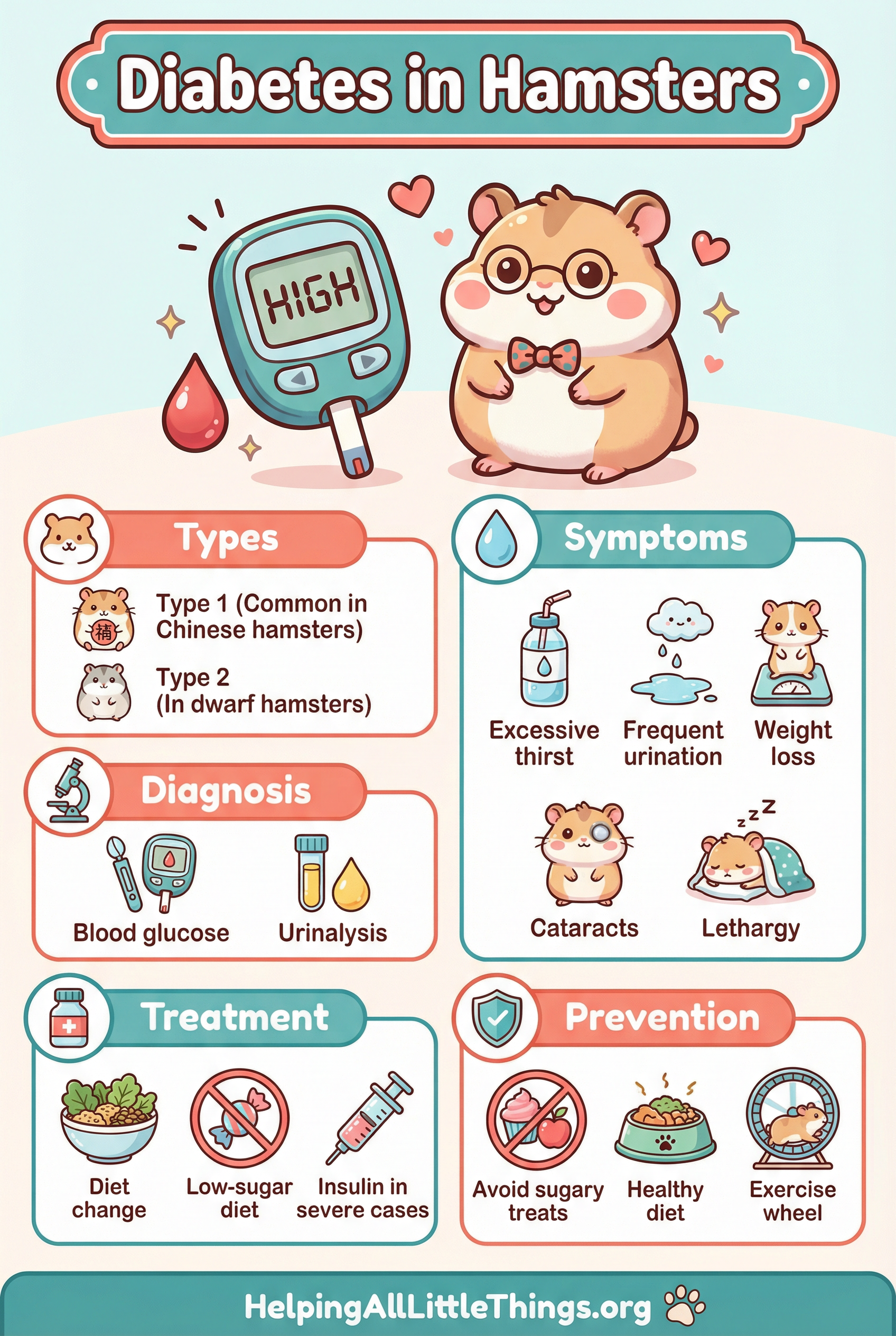

Diabetes is one of the more common health conditions seen in certain hamster breeds, particularly dwarf hamsters. Like diabetes in humans, it is a chronic metabolic disorder affecting how the body processes sugar. With early detection and proper management, diabetic hamsters can live comfortable, good-quality lives.
What Is Diabetes in Hamsters?
Diabetes mellitus is a metabolic disorder in which the pancreas cannot produce enough insulin, or the body cannot use insulin effectively. Insulin is a hormone that allows cells to absorb glucose (sugar) from the bloodstream for energy. When insulin function is impaired, glucose accumulates in the blood, leading to hyperglycemia (high blood sugar) and a cascade of health problems.
Which Hamsters Are Most at Risk?
Diabetes is most commonly seen in dwarf hamster species:
| Species | Risk Level |
|---|---|
| Campbell's dwarf hamster (Phodopus campbelli) | Very high — genetic predisposition |
| Chinese hamster (Cricetulus griseus) | High |
| Winter White / Djungarian (Phodopus sungorus) | Moderate |
| Syrian (Golden) hamster (Mesocricetus auratus) | Low |
| Roborovski dwarf (Phodopus roborovskii) | Low |
Campbell's dwarf hamsters have a particularly strong genetic predisposition; diabetes is considered an autosomal recessive trait in this species.[1]
Signs and Symptoms
Because hamsters are small and good at hiding illness, diabetes can be difficult to detect early. Watch for:
- Increased thirst — drinking much more water than usual
- Increased urination — wet bedding, frequent urination
- Weight loss despite normal or increased appetite
- Increased appetite — eating more than usual
- Lethargy and weakness — less active, spending more time resting
- Sticky or sweet-smelling urine — high glucose in urine
- Cataracts — cloudy eyes; diabetic cataracts are common in hamsters[2]
- Poor coat condition — dull, rough fur
- Slow wound healing
Cataracts developing in a young hamster — especially a dwarf hamster — are a strong indicator of diabetes. Have your hamster examined by a vet promptly.
Causes
Genetics is the primary driver of diabetes in hamsters, particularly in Campbell's dwarfs. However, environmental and dietary factors can trigger or worsen the condition:
- High-sugar diet — commercial hamster mixes containing dried fruit, honey drops, or high-carbohydrate treats significantly increase risk
- Obesity — excess body weight exacerbates insulin resistance
- Stress — chronic stress can affect blood glucose regulation
- Sedentary lifestyle — lack of exercise and enrichment
Diagnosis
If you suspect diabetes, consult a veterinarian experienced with small animals. Diagnostic methods include:
- Urine glucose test — glucose dipstick test on a urine sample; a non-invasive first screen
- Blood glucose measurement — a small blood sample to measure glucose levels directly
- Physical examination — assessing body condition, eye health, and hydration
Some owners use over-the-counter urine test strips at home as a monitoring tool, but a veterinary diagnosis is essential for proper management.
Normal blood glucose in hamsters: approximately 60–130 mg/dL; diabetic hamsters often exceed 200 mg/dL.[3]
Management
There is currently no cure for diabetes in hamsters, but the condition can be managed effectively:
Dietary Management
This is the cornerstone of diabetes management in hamsters:
- Remove all sugary foods — no dried fruit, honey drops, yogurt drops, or high-sugar treats
- Feed a low-carbohydrate diet — plain lab blocks or a seed mix without fruit/sweet additions
- Offer fresh vegetables in small amounts — cucumber, broccoli, leafy greens (avoid sweet vegetables like carrots and corn)
- Provide constant access to fresh water
Exercise and Enrichment
- Ensure your hamster has a large wheel (at least 8–10 inches for Syrian, 6–8 inches for dwarfs) for nightly exercise
- Provide tunnels, hides, and foraging opportunities to encourage activity
Medical Treatment
In some cases, a veterinarian may recommend:
- Insulin therapy — rarely used in hamsters due to the difficulty of administration and the small doses required, but may be considered in severe cases
- Oral hypoglycemic agents — not commonly used in hamsters
- Regular monitoring — periodic urine or blood glucose checks
Monitoring at Home
- Check bedding wetness daily — excessive wetness suggests ongoing polyuria
- Weigh your hamster weekly; weight loss despite eating is a sign of poor control
- Check eyes regularly for developing cataracts
Prognosis
With dietary management, many diabetic hamsters can live relatively normal lives. However, diabetes is a progressive condition, and complications (cataracts, kidney disease, infections) are common over time. Regular veterinary monitoring helps catch complications early.
References
[1] Gerritsen, G.C. (1982). The Chinese hamster as a model for the study of diabetes mellitus. Diabetes, 31(Suppl 1), 14–23.
[2] Robison, W.G., Nagata, M., Laver, N., Hohman, T.C., & Kinoshita, J.H. (1989). Diabetic-like retinopathy in rats prevented with an aldose reductase inhibitor. Investigative Ophthalmology & Visual Science, 30(11), 2285–2292.
[3] Quesenberry, K.E., Mans, C., & Orcutt, C.J. (2020). Ferrets, Rabbits, and Rodents: Clinical Medicine and Surgery (4th ed.). Elsevier.
[4] Carpenter, J.W. (2018). Exotic Animal Formulary (5th ed.). Elsevier.