Understanding Gerbil Behavior: A Guide for Owners
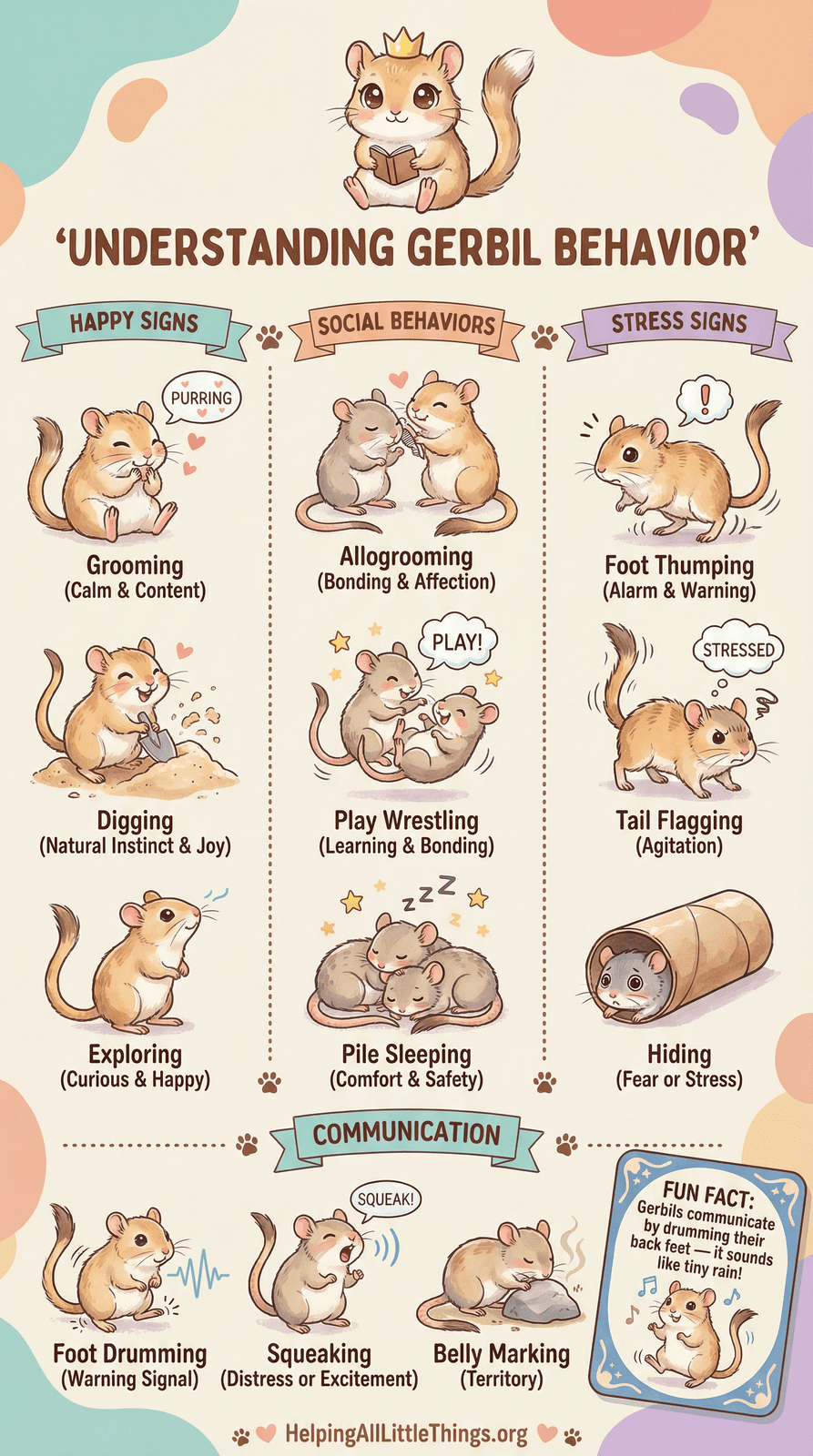

Gerbils are highly social, curious animals that communicate through a combination of body language, scent marking, and vocalizations. They are naturally active and inquisitive, and a gerbil that feels safe will constantly be exploring, digging, and interacting with their companions. Understanding their behavior helps you build a stronger bond and spot health problems early.
Common Gerbil Body Language
| Behavior | Common Meaning(s) | Context & Interpretation |
|---|---|---|
| Thumping Hind Feet | Alarm, Warning | Gerbils thump their hind feet rapidly on the ground to warn their group of danger. This is a key communication signal and should prompt you to check for stressors in their environment. [1] |
| Standing Upright | Alert, Curious | A gerbil standing on their hind legs is alert and curious, surveying their environment. This is a positive, engaged behavior. [1] |
| Mutual Grooming | Bonding, Affection | Gerbils that groom each other are bonded and comfortable together. This is one of the most important social behaviors to look for in a pair or group. [1] |
| Scent Marking (Belly Rubbing) | Territorial Marking | Gerbils have a scent gland on their belly and will rub it on objects to mark their territory. This is normal and healthy. [1] |
| Digging | Natural Instinct, Enrichment | Gerbils are burrowing animals and need deep bedding to dig. Enthusiastic digging is a sign of a happy, engaged gerbil. |
| Freezing | Fear, Caution | A gerbil that freezes suddenly is responding to a perceived threat. Give them space and remove the stressor if possible. |
| Chasing / Mounting | Dominance, Hormonal | Some chasing and mounting is normal in establishing hierarchy, but persistent, one-sided chasing can indicate a breakdown in the bond (declanning). Monitor closely. |
Common Gerbil Vocalizations
| Sound | Common Meaning(s) | Context & Interpretation |
|---|---|---|
| Squeaking | Excitement, Distress | Short squeaks during play are normal. Repeated or loud squeaking signals distress or pain. [1] |
| Ultrasonic Calls | Social Communication | Much of gerbil communication occurs at frequencies above human hearing. They use these calls constantly to communicate with their group. |
| Teeth Chattering | Warning, Aggression | Teeth chattering is a warning signal, often seen during territorial disputes or when a gerbil is frightened. |
Social Behavior: The Gerbil Clan
Gerbils are clan animals and should always be kept in same-sex pairs or groups. A lone gerbil will suffer from chronic stress and loneliness. However, gerbils can "declan" — a breakdown of the social bond that can turn fatal if not caught early.
Signs of declanning include: persistent chasing, one gerbil losing weight, a gerbil hiding constantly, or wounds from fighting. If you suspect declanning, separate the gerbils immediately and consult a rescue or experienced owner about reintroduction or permanent separation.
Signs of a Happy and Healthy Gerbil
A happy gerbil is active, curious, and engaged with their environment and companions. They will dig, explore, groom themselves and each other, and investigate everything in their enclosure. Their coat should be smooth and clean, their eyes bright, and their weight stable.
Signs of Stress, Fear, or Pain
- Hunched posture, reluctance to move
- Puffed or dull coat
- Excessive hiding or lethargy
- Loss of appetite or weight loss
- Wounds or fur loss (signs of fighting)
- Persistent thumping without obvious cause
References
[1] RSPCA. (2023). Gerbil Behaviour. Retrieved from https://www.rspca.org.uk/adviceandwelfare/pets/rodents/gerbils/behaviour