Sexing Your Pet Gerbil
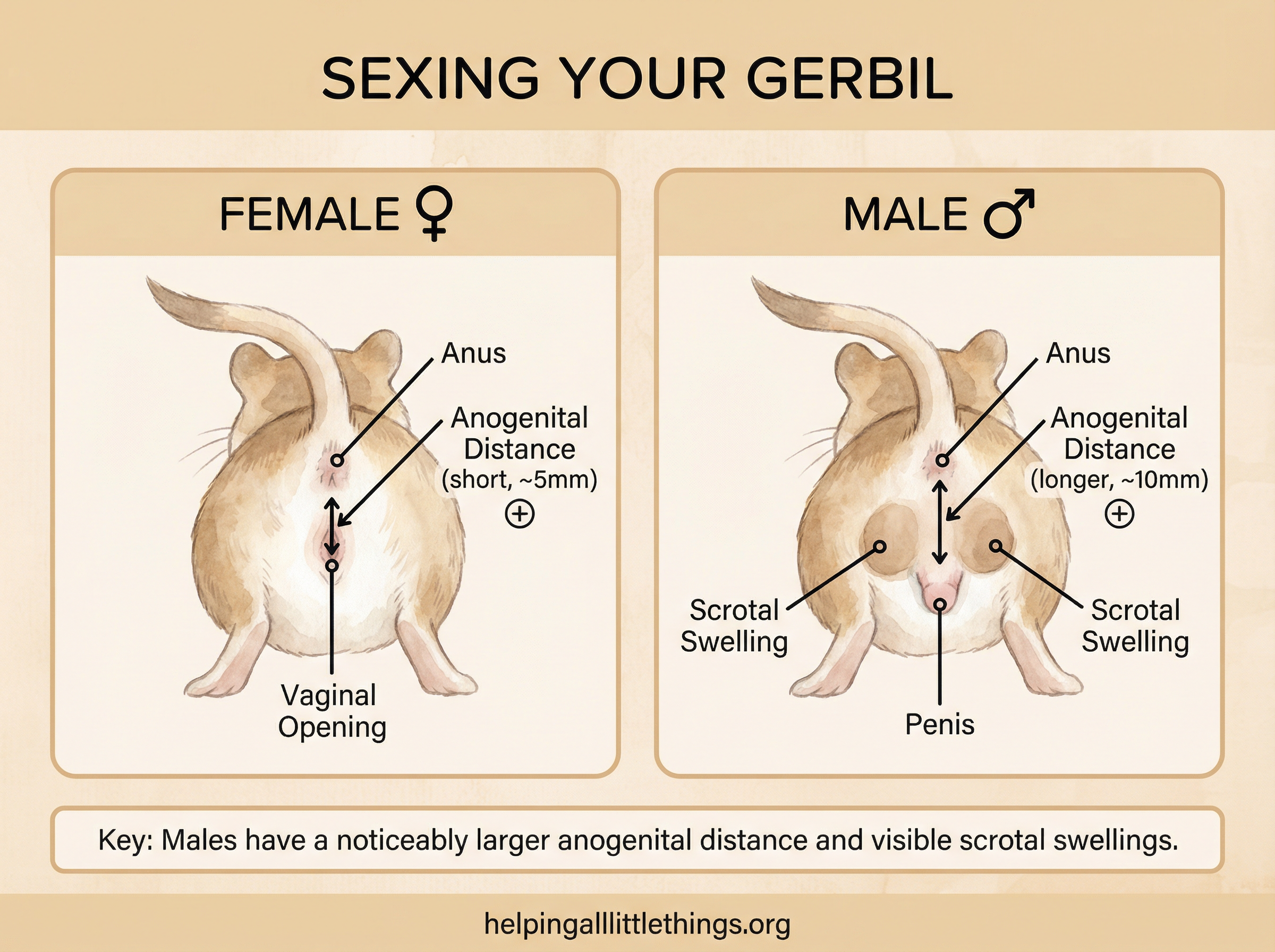

Correctly identifying the sex of your gerbils is essential, as keeping mixed-sex pairs will quickly result in litters. Fortunately, gerbils are one of the easier small animals to sex, especially once they are adults.
The Primary Method: Anogenital Distance
The most reliable way to sex a gerbil is to measure the space between the anus and the genital opening.
- Males: Have a noticeably larger gap between the anus and the genital papilla (urethral opening). [1]
- Females: Have a smaller gap, with the two openings very close together. [2]
| Feature | Male | Female |
|---|---|---|
| Anogenital Gap | Larger (a clear space) | Smaller (openings are close together) |
| Testicles (adults) | Visible as a prominent bulge under the tail | Absent |
| Nipples | Absent | 8 small dots visible on the belly |
Easier Identification in Adults
In adult gerbils (7 weeks and older), sexing becomes even more straightforward.
- Males: Adult male gerbils have prominent, visible testicles that can be seen as a distinct bulge at the base of their tail. This is the easiest and most obvious indicator. [3]
- Females: Females have 8 small nipples visible on their belly (4 on each side). Males do not have nipples. [4]
If you are ever uncertain, a veterinarian or an experienced gerbil breeder can easily confirm the sex of your gerbils for you.
References
[1] National Gerbil Society. (n.d.). Sexing Gerbils. http://gerbils.co.uk/gerbil-help/sexing-gerbils/
[2] JustAnswer. (2017). How can you tell the sex of gerbils?. https://www.justanswer.com/pet/0p7e0-know-gerbil-boy-girl.html
[3] MSD Veterinary Manual. (n.d.). Breeding and Reproduction of Gerbils. https://www.msdvetmanual.com/all-other-pets/gerbils/breeding-and-reproduction-of-gerbils
[4] TheGerbils.com. (n.d.). Sexing Gerbils. http://www.thegerbils.com/breeding2sex.htm