Understanding Ferret Behavior: A Guide for Owners
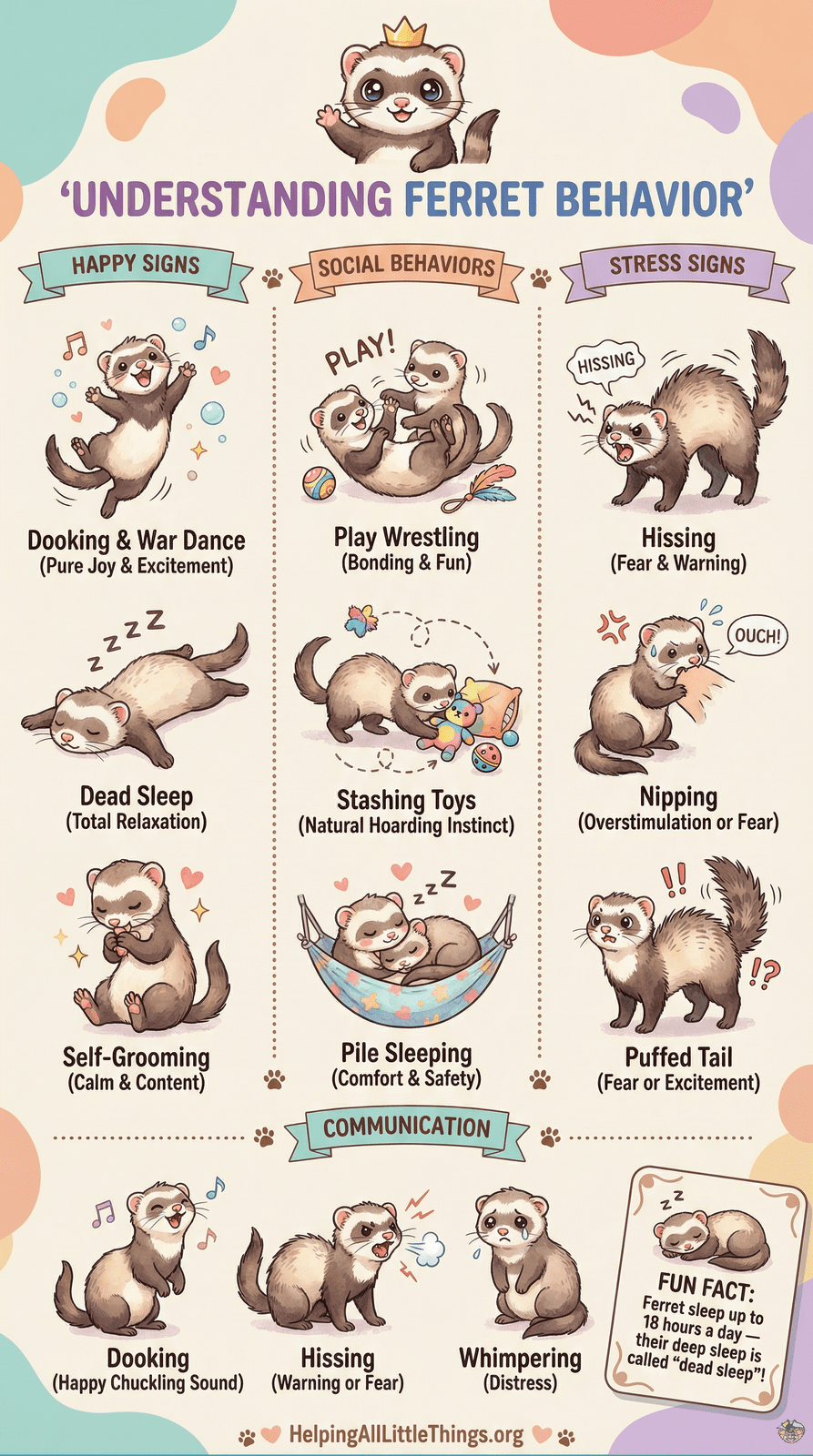

Ferrets are playful, mischievous, and highly social animals with a personality that is often described as a cross between a cat and a dog. They are crepuscular — most active at dawn and dusk — and sleep deeply for long stretches in between. Understanding their unique behaviors is key to a happy, healthy ferret.
Common Ferret Body Language
| Behavior | Common Meaning(s) | Context & Interpretation |
|---|---|---|
| Dooking | Pure Joy, Excitement | Dooking is a rapid clucking or chuckling sound made during play. It is one of the most beloved ferret behaviors and signals that your ferret is having the time of their life. [1] |
| War Dance | Excitement, Playfulness | The war dance is a frenzied, sideways hopping and bouncing movement, often accompanied by dooking. It is an invitation to play and a sign of a very happy ferret. [1] |
| Nipping | Play, Overstimulation | Ferrets use their mouths to explore and play. Nipping is common, especially in young ferrets. Consistent training with a firm "no" and redirecting to toys is effective. |
| Hissing | Warning, Fear, Aggression | A hiss is a clear warning. The ferret is frightened or annoyed. Give them space. [1] |
| Puffed Tail | Fear, Excitement | A puffed-up tail (like a bottle brush) signals either fear or intense excitement. Context will tell you which. |
| Stashing Objects | Natural Hoarding Instinct | Ferrets are natural hoarders and will steal and stash shiny objects, socks, and anything else they can carry. This is completely normal and endearing. |
| Dead Sleep (Ferret Dead) | Deep Sleep | Ferrets sleep so deeply they can be mistaken for dead — limp, unresponsive, and seemingly lifeless. This is normal. If your ferret does not rouse after a minute or two of gentle stimulation, contact a vet. |
Common Ferret Vocalizations
| Sound | Common Meaning(s) | Context & Interpretation |
|---|---|---|
| Dooking | Joy, Excitement | The signature ferret happy sound — a rapid clucking or chuckling during play. [1] |
| Hissing | Warning, Fear | A clear signal to back off. [1] |
| Whimpering / Whining | Pain, Distress | A whimpering ferret is in pain or distress. Investigate immediately. |
| Barking | Extreme Fear or Excitement | A sharp bark is rare and signals either extreme fear or intense excitement. |
Social Behavior
Ferrets are highly social animals that thrive in pairs or groups (called a "business"). A lone ferret can become bored, depressed, and destructive. Ferrets that are bonded will sleep in piles, groom each other, and play together constantly.
Introductions between ferrets should be done gradually in a neutral space, but ferrets generally accept new companions more readily than many other small animals.
Signs of a Happy and Healthy Ferret
A happy ferret is active, playful, and curious during their waking hours. They will dook, war dance, explore every corner of their play space, and interact enthusiastically with their companions and human family. Their coat should be smooth and shiny, their eyes bright and clear, and their weight stable.
Signs of Stress, Fear, or Pain
- Lethargy or reluctance to play (ferrets are almost always playful when awake)
- Loss of appetite or weight loss
- Grinding teeth (bruxism) — a sign of nausea or pain
- Pawing at the mouth
- Hind leg weakness (can indicate insulinoma or other serious illness)
- Prolonged sleeping beyond normal deep sleep
Ferrets are prone to several serious diseases including insulinoma (low blood sugar), adrenal disease, and lymphoma. Annual vet checkups are essential, and any sudden behavioral change warrants a vet visit.
References
[1] Chewy. (2023). Ferret Body Language Guide. Retrieved from https://www.chewy.com/education/small-pet/ferret/ferret-body-language