Parasites in Ferrets
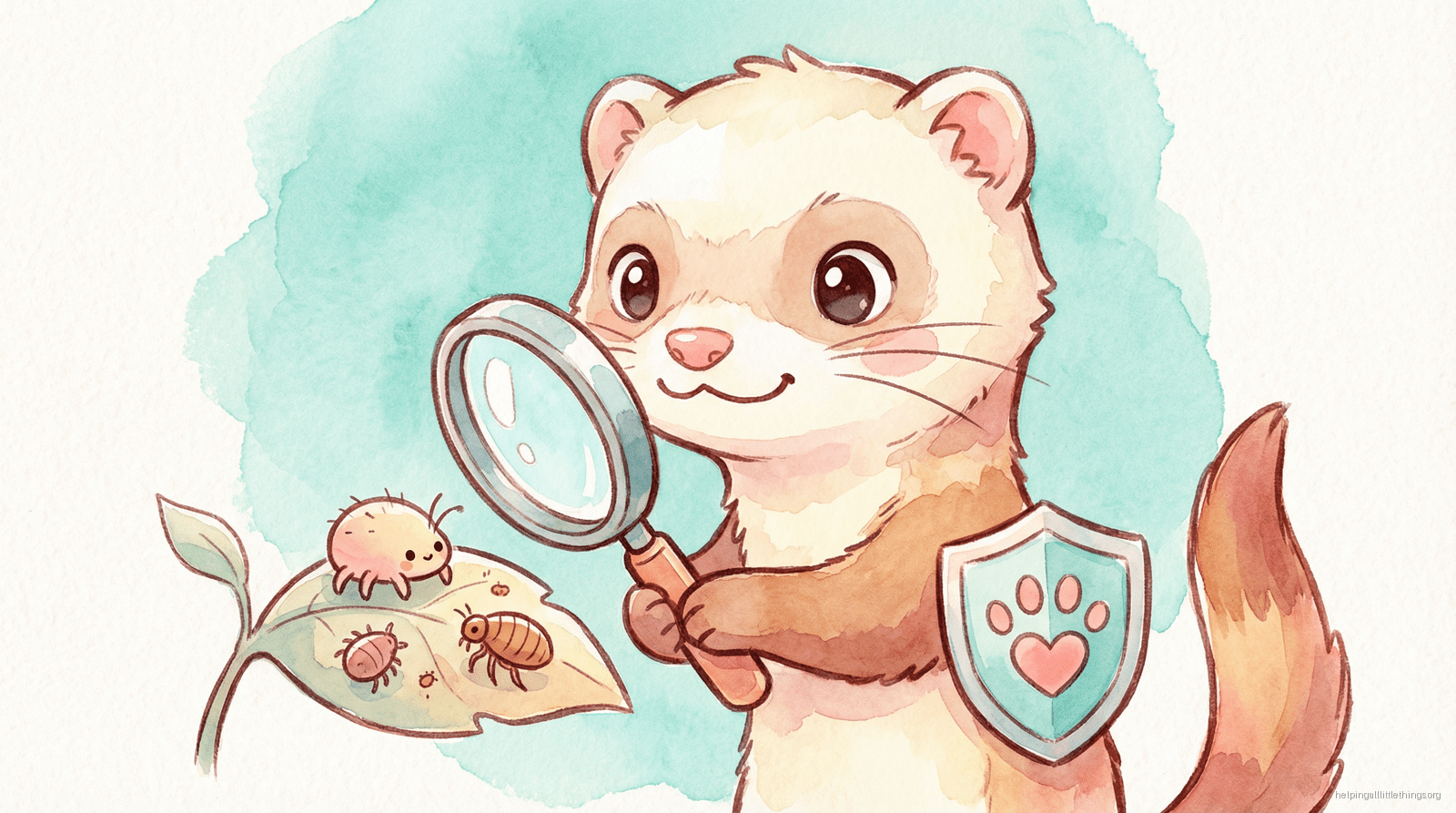
Share this infographic:

Ferrets can be affected by a variety of internal and external parasites. While some, like ear mites, are common and relatively easy to treat, others, like heartworm, are life-threatening and make preventative care essential. Parasite control is a critical component of responsible ferret ownership.
External Parasites
-
Ear Mites (Otodectes cynotis):
- Cause: This is the most common parasite seen in ferrets. These microscopic mites live in the ear canal and feed on wax and skin debris. They are highly contagious between ferrets and can also be passed to and from cats.
- Signs: The hallmark sign is a large amount of dark, reddish-brown, or black ear wax that looks like coffee grounds. The ferret will be very itchy, scratching at its ears and shaking its head.
- Action: A veterinarian will diagnose the mites by examining a sample of the ear debris under a microscope. Treatment is simple and effective, usually involving a thorough ear cleaning followed by a prescription medication like ivermectin or selamectin.
-
Fleas (Ctenocephalides felis):
- Cause: Ferrets are very susceptible to fleas, typically catching them from an infested environment or other household pets like cats and dogs.
- Signs: An itchy ferret, visible fleas (small, fast-moving dark insects), and "flea dirt" (flea feces that look like black specks) in the fur.
- Action: It is crucial to use a ferret-safe flea treatment prescribed by a veterinarian. Many over-the-counter dog and cat flea products are highly toxic to ferrets and can be fatal. Your vet can recommend a safe product, often a kitten-safe formula like Revolution (selamectin). You must also treat all other pets in the household and the environment (bedding, carpets) to eliminate the infestation.
Internal Parasites
-
Heartworm Disease (Dirofilaria immitis):
- Cause: This is a deadly but preventable disease. It is caused by a parasitic worm that is transmitted through the bite of an infected mosquito. The worms mature and live in the heart and major blood vessels, causing severe damage.
- Signs: The signs can be subtle and non-specific. They include lethargy, coughing, weakness, and difficulty breathing. Often, the first sign is sudden collapse and death.
- Action: There is no safe or effective treatment for heartworm disease in ferrets. This makes prevention the only option. Ferrets living in areas where heartworm is present (which is most of the United States) should be on a monthly heartworm preventative prescribed by a veterinarian. This is usually the same medication used for flea prevention.
-
Coccidia:
- Cause: These are microscopic protozoan parasites that live in the intestinal tract. They are particularly common in young ferrets (kits) from breeding facilities or pet stores.
- Signs: The most common sign is diarrhea, which may be bloody. It can also cause weight loss and dehydration.
- Action: A veterinarian can diagnose coccidia by examining a fecal sample. Treatment is with a prescription anti-parasitic medication.
Prevention is the Best Medicine
- Veterinary Preventatives: Talk to your vet about a monthly parasite prevention plan. A single product often protects against heartworm, fleas, and ear mites.
- Quarantine: Always quarantine new ferrets for at least 30 days and have them checked by a vet before introducing them to your other ferrets.
- Good Hygiene: Keep the cage, bedding, and litter boxes clean to reduce the risk of internal parasite transmission.
- Fecal Exams: An annual fecal exam by your vet is a good way to screen for internal parasites.
By working with your veterinarian to create a comprehensive parasite control plan, you can protect your ferret from these common and sometimes deadly pests.