Sexing Your Pet Ferret
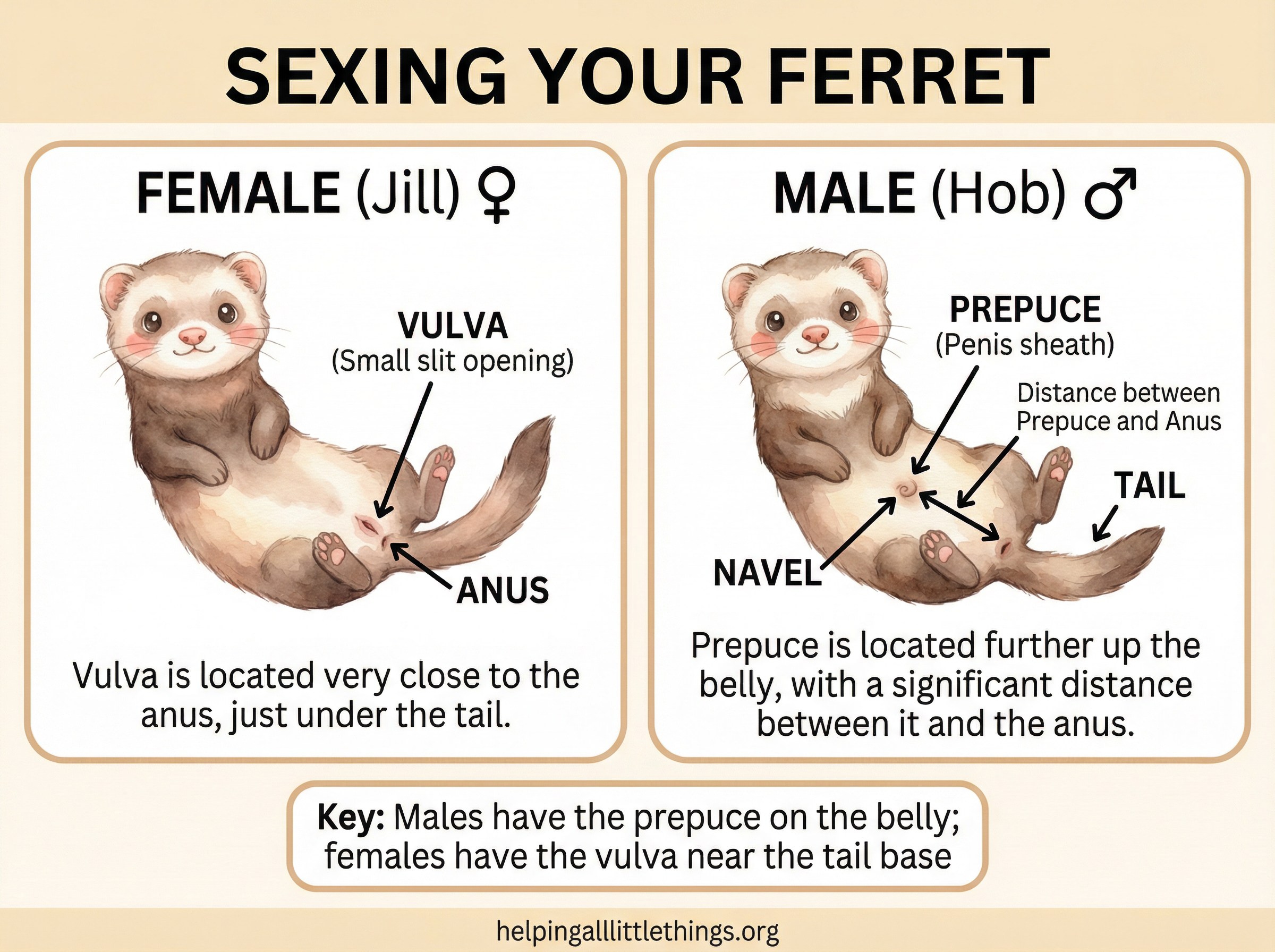

Correctly identifying the sex of your ferret is a straightforward process once you know where to look. It's an important step for any new owner, especially since nearly all pet ferrets in the United States are spayed or neutered before they are sold.
The Key Difference: Location, Location, Location
The easiest way to tell a male from a female ferret is by looking at their belly.
-
Males (Hobs): A male ferret has a penis located on his mid-abdomen. It looks very much like a belly button. This is the most obvious and reliable indicator of a male. [1]
-
Females (Jills): A female ferret's anatomy is less obvious. Her vulva is located directly below her anus, and there is no belly-button-like opening on her abdomen. [2]
| Feature | Male (Hob) | Female (Jill) |
|---|---|---|
| "Belly Button" | Present (this is the penis) | Absent |
| Genital Location | Mid-abdomen | Directly below the anus |
Other, Less Reliable Differences
While anatomy is the only definitive way to sex a ferret, there are some general size and behavioral differences.
- Size: Male ferrets are typically larger and heavier than females. [3]
- Scent: Intact (un-neutered) males have a much stronger musky odor than females, but since most pet ferrets are neutered, this is not a useful indicator for the average owner.
If you are ever unsure, a quick check for the "belly button" will give you a clear answer. A veterinarian can also easily confirm the sex of your ferret for you.
References
[1] Reddit Community. (n.d.). How do you gender ferrets?. https://www.reddit.com/r/ferrets/comments/1kjmgoq/how_do_you_gender_ferrets/
[2] Holistic Ferret Forum. (n.d.). Sexing Your Ferret. https://holisticferretforum.com/about-ferrets/sexing-your-ferret/
[3] Oreate AI. (2026). Understanding the Differences Between Female and Male Ferrets. https://www.oreateai.com/blog/understanding-the-differences-between-female-and-male-ferrets/9ab39bfedfc46f50e318b70ac80949be