Understanding Degu Behavior: A Guide for Owners
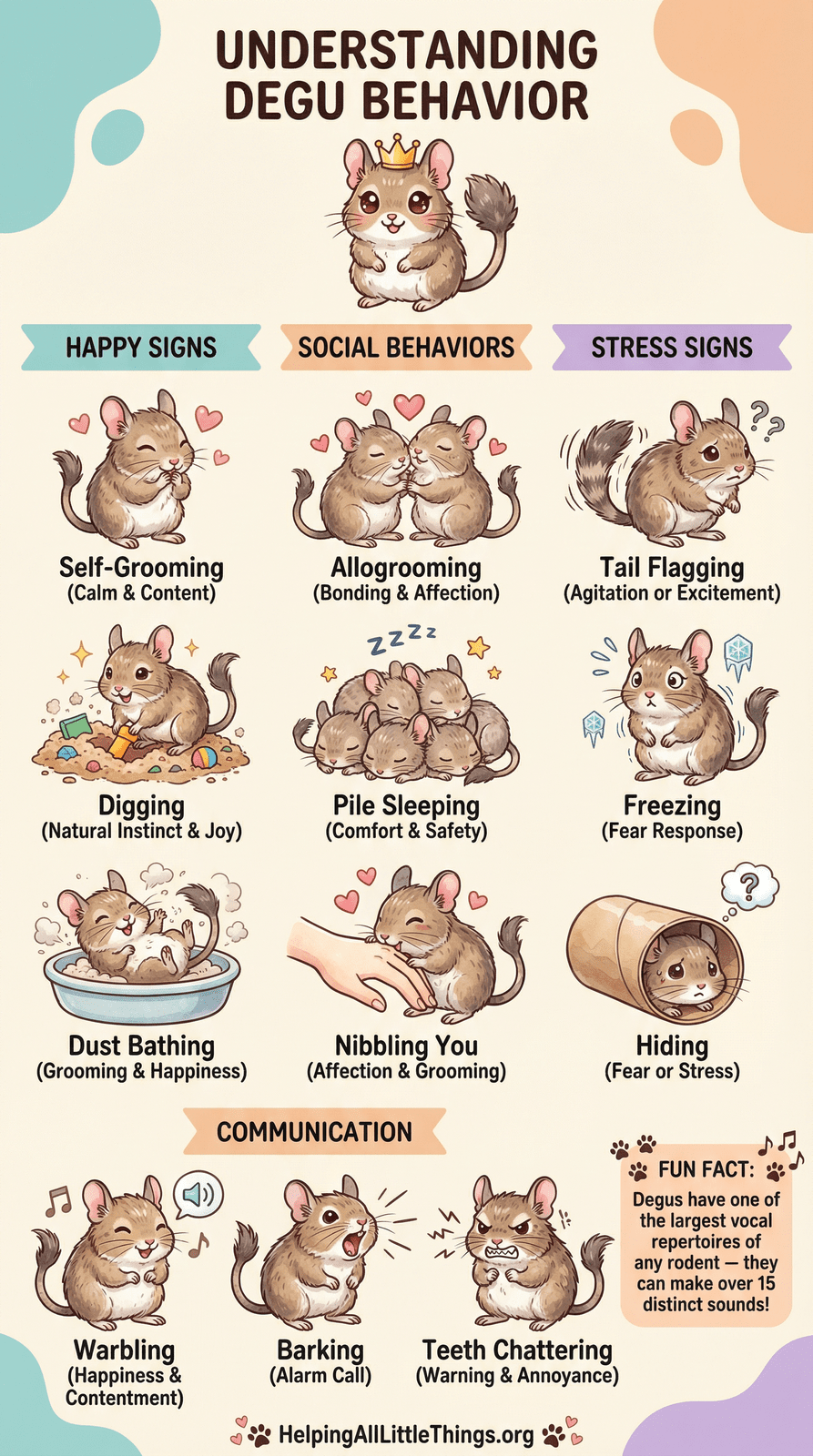

Degus are highly social, intelligent, and vocal rodents from Chile, often described as having the curiosity of a rat and the social complexity of a prairie dog. They live in large underground communities and have a complex system of communication. Understanding their chatty nature and body language is essential for their care.
Common Degu Body Language
| Behavior | Common Meaning(s) | Context & Interpretation |
|---|---|---|
| Tail Wagging / Flicking | Excitement, Courtship, Annoyance | A wagging or flicking tail can signal excitement or a female's readiness to mate. However, it can also be a sign of agitation or a prelude to a fight. [1] |
| Stashing Food | Natural Instinct | Degus are natural hoarders. They will instinctively gather and hide food in various spots around their enclosure. This is normal behavior. [1] |
| Dust Bathing | Grooming, Health | Like chinchillas, degus need regular dust baths to keep their coats clean and free of oils. This is a crucial and enjoyable part of their routine. [1] |
| Urine Marking | Territorial, Dominance | Degus mark their territory with urine. The dominant degu in a group will often mark over the scent of others to assert their status. [1] |
| Nibbling / Grooming You | Affection, Social Bonding | A gentle nibble is a degu's way of grooming you, which is a sign of affection and acceptance. They are including you in their social group. [1] |
| Mounting | Dominance | One degu mounting another is not always sexual; it is often a way to establish social hierarchy and dominance within the group. [1] |
| Freezing | Fear, Caution | When a degu freezes and remains motionless, it is usually a sign of fear or uncertainty. They are trying to avoid detection by a perceived threat. [1] |
Common Degu Vocalizations
Degus have one of the most extensive vocal repertoires among rodents.
| Sound | Common Meaning(s) | Context & Interpretation |
|---|---|---|
| Warbling / Chirping | Happiness, Contentment | A happy, content degu will often make a pleasant warbling or chirping sound. This is the sound you want to hear! [1] |
| Rapid Squeaks | Alarm, Fear | A series of loud, rapid squeaks is an alarm call, signaling fear or danger. You should check on your degu immediately if you hear this. [1] |
| Teeth Chattering | Annoyance, Warning | A grinding or chattering of the teeth is a sign of an annoyed degu. It's a warning to back off. [1] |
| Gurgling / Trilling | Greeting | When degus greet each other, they often make a soft gurgling or trilling sound as they sniff and groom one another. |
| Barking | Alarm, Warning | A loud, sharp bark is a serious alarm call, used to warn the colony of a predator. |
Signs of a Happy and Healthy Degu
A happy degu is active, curious, and social. They will spend their day digging, chewing, running on their wheel, and interacting with their cage mates. They should have a healthy appetite, a clean and smooth coat, and be interested in taking dust baths. A healthy degu will be vocal and responsive to its environment.
Signs of Stress, Fear, or Pain
Because they are prey animals, degus will try to hide any signs of weakness.
- Hiding more than usual or being lethargic
- Loss of appetite or refusal to eat
- A hunched posture or unkempt fur
- Over-grooming or fur pulling (on themselves or a cage mate)
- Aggression towards cage mates in a previously stable group
- Cloudy eyes or a nasal discharge
If you notice any of these signs, it is critical to consult with a veterinarian who has experience with exotic pets.
References
[1] Doering, L. (2025, April 30). 10 Common Degu Behaviors. Chewy Education. Retrieved from https://www.chewy.com/education/small-pet/degu/10-common-degu-behaviors