Home Health Care for Pet Degus
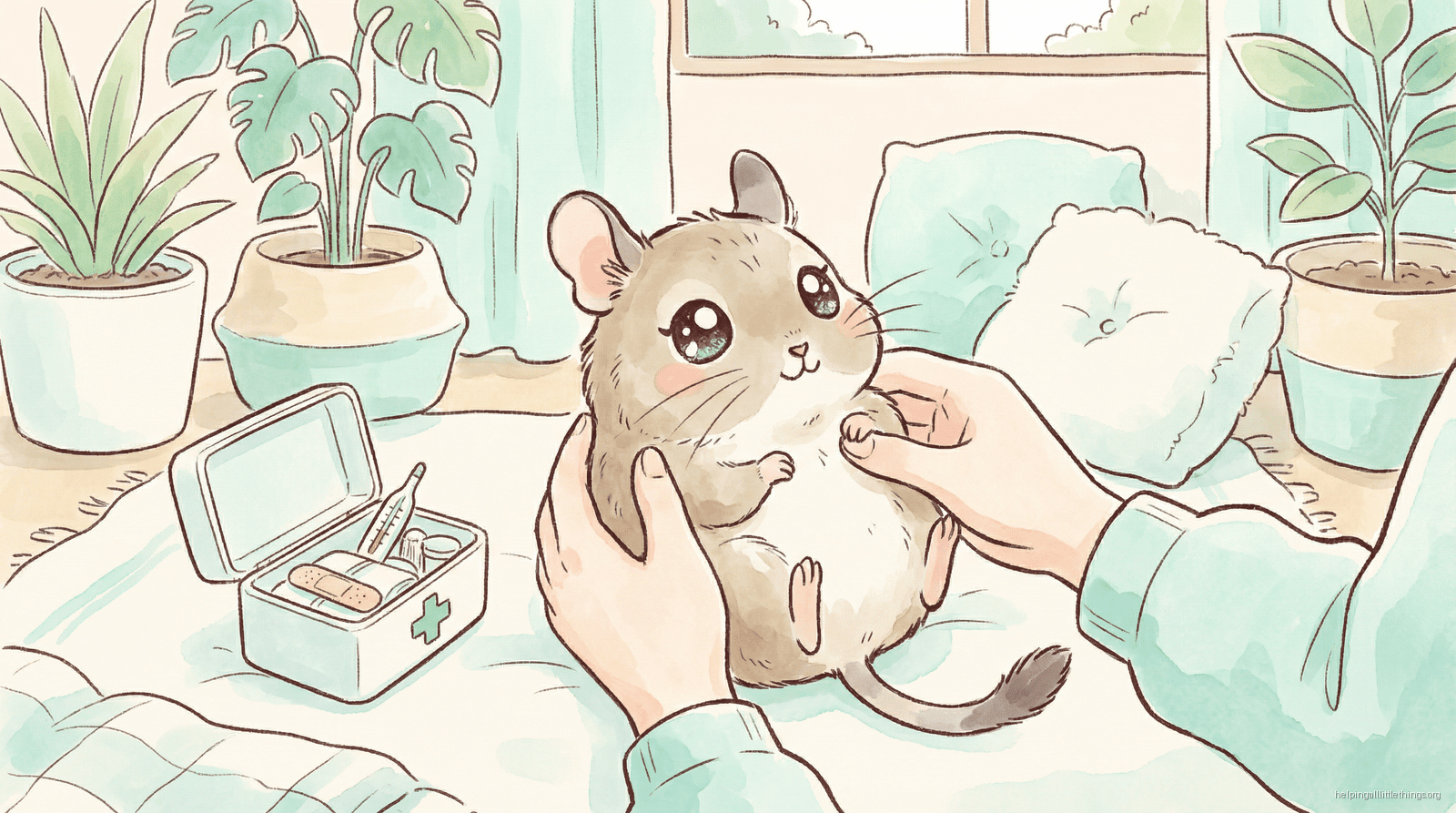

Degus are generally robust little animals, but as prey species, they are masters at hiding signs of illness. Performing a regular health check at home is one of the best ways to monitor their well-being and catch potential problems early. Aim to perform this check weekly or bi-weekly. [1]
The Weekly Degu Health Checklist
During your check, handle your degu gently and make the experience positive with calm interaction. Look for the following signs of a healthy degu:
- Active and Alert: A healthy degu is curious, bright, and interested in their surroundings.
- Clear Eyes and Nose: Eyes should be wide and clear with no discharge, and the nose should be dry.
- Clean and Tidy Coat: Fur should be glossy and full, with no bald patches or signs of parasites.
Head-to-Tail Check
| Body Part | What to Check | Signs of Potential Problems |
|---|---|---|
| Weight | Weigh your degu on a small kitchen scale and record it. | Consistent weight loss is one of the most reliable early indicators of illness. [2] |
| Eyes | Check for brightness and clarity. | Cloudiness (cataracts), discharge, or swelling. Opaque whitening can be a sign of diabetes. [3] |
| Nose | Should be clean and dry. | Any discharge or persistent sneezing. |
| Mouth/Teeth | Teeth should be a deep yellow-orange color. Check for any wetness around the mouth. | White teeth indicate a dietary issue. Drooling or wet fur around the chin ("slobbers") points to dental problems. [4] |
| Ears | Should be clean and free of debris. | Excessive scratching, head shaking, or any crust or mites. |
| Coat & Skin | Fur should be smooth and dense. Part the fur to check the skin. | Bald patches, dandruff, lumps, bumps, or external parasites. |
| Feet | Check the pads of the feet. | Redness, swelling, or sores (a condition known as bumblefoot). |
| Bottom | The area under the tail should be clean and dry. | Any staining, wetness, or signs of diarrhea. |
| Behavior | Observe their general activity, eating, and drinking habits. | Lethargy, loss of appetite, excessive drinking or urination, or any significant change from their normal behavior. [5] |
If you notice any of these signs of illness, it is crucial to contact a veterinarian who has experience with exotic pets as soon as possible. Early intervention gives your degu the best chance for a positive outcome.
References
[1] Wood Green. (n.d.). Health checking your degus. https://woodgreen.org.uk/wp-content/uploads/2025/07/02035-PS-Degus-small-pets-care-guide-web-AW.pdf
[2] Degutopia. (n.d.). Keeping Your Degus Healthy. http://www.degutopia.co.uk/deguhealth.htm
[3] RSPCA. (n.d.). Degu Health & Welfare Tips. https://www.rspca.org.uk/adviceandwelfare/pets/rodents/degus/health
[4] The Common Degu or Degu Octodon. (n.d.). The Common Degu or Degu Octodon. https://www.vetetnous.com/en/tips/the-common-degu-or-degu-octodon/
[5] Animal Rescue League of Iowa. (n.d.). DEGU Care. https://www.arl-iowa.org/webres/File/Degu%20Care.pdf