Gastrointestinal (GI) Health in Degus
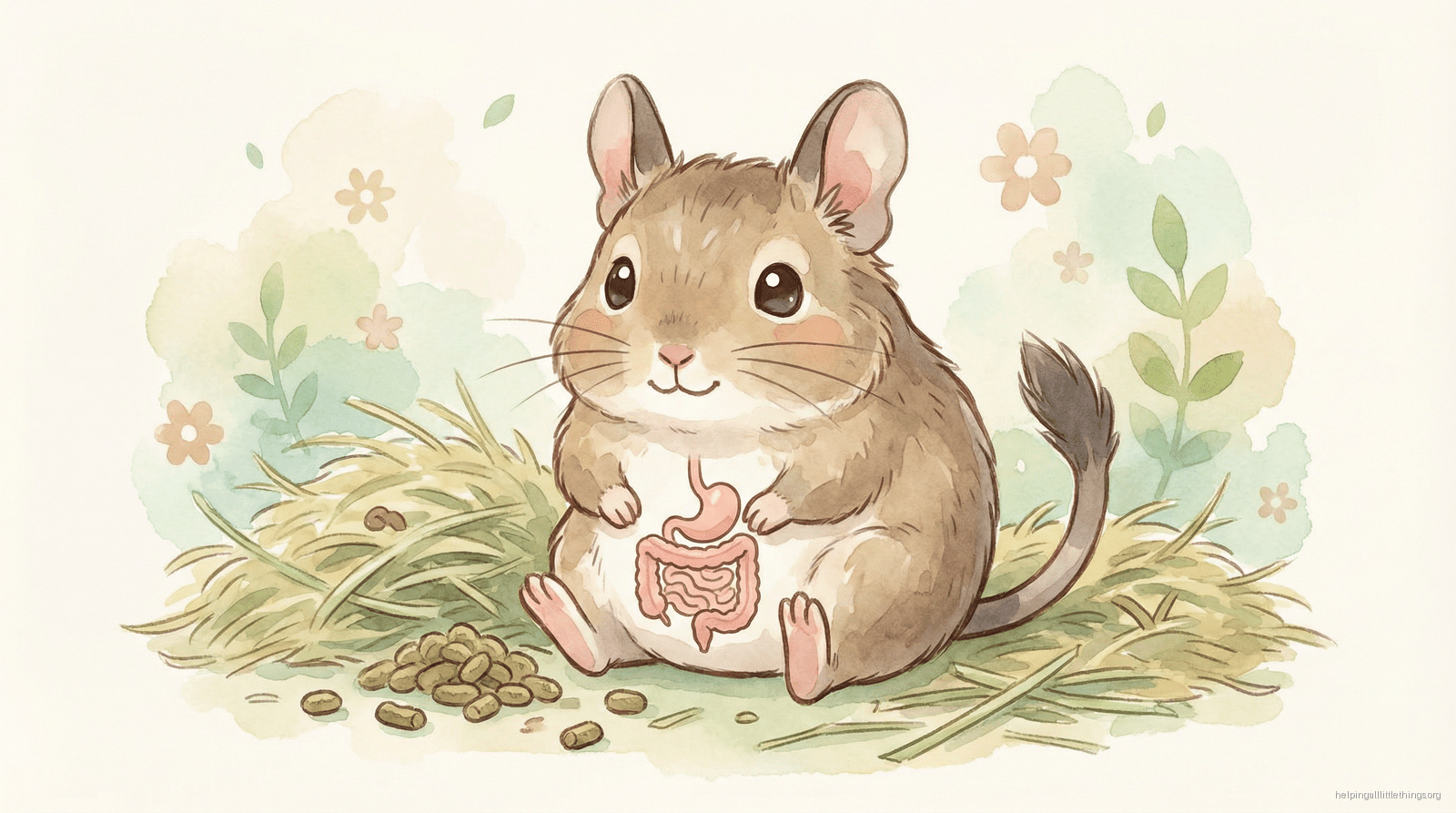

A degu's digestive system is adapted for a harsh, arid environment, designed to extract nutrients from a diet high in fiber and low in sugar and fat. Their gastrointestinal (GI) tract is sensitive, and dietary errors are the root cause of the most common and serious health problems in degus, including GI stasis, bloat, and diabetes. Maintaining a healthy gut is synonymous with maintaining a healthy degu.
The Degu Digestive System
Like their chinchilla relatives, degus are hindgut fermenters. They have a specialized cecum that houses a delicate ecosystem of bacteria responsible for fermenting tough plant fibers into energy. This system requires a constant intake of high-fiber material (hay) to function correctly. Any disruption to this bacterial balance or the normal movement of the gut can lead to a cascade of life-threatening problems.
Common GI Issues in Degus
-
GI Stasis: This is a condition where the normal muscular contractions of the digestive tract (peristalsis) slow down or stop. This is not a blockage, but rather a functional problem. Food and fluid stop moving, which causes painful gas to build up and allows harmful bacteria to proliferate.
- Causes: A low-fiber diet, dehydration, stress, or pain from another underlying condition (like dental disease) are the most common triggers.
- Signs: Loss of appetite, small or absent fecal pellets, lethargy, and a hunched posture indicating abdominal pain.
- Action: This is a veterinary emergency. Treatment involves pain management, rehydration, drugs to stimulate gut motility, and supportive syringe-feeding.
-
Bloat: While less common than in chinchillas, bloat can occur in degus. It is a dire emergency where the stomach fills with gas, putting pressure on the heart and lungs.
- Causes: Often caused by eating inappropriate foods, particularly sugary treats or certain vegetables.
- Signs: A visibly swollen and hard abdomen, extreme lethargy, and difficulty breathing.
- Action: Requires immediate emergency veterinary intervention.
-
Diarrhea: True diarrhea in an adult degu is uncommon and very serious. It indicates a severe disruption of the gut microbiome.
- Causes: It can be caused by bacterial or parasitic infections, or by the introduction of too many rich, sugary, or watery vegetables.
- Action: This requires an immediate vet visit to diagnose the cause and begin treatment, as it can lead to rapid and fatal dehydration.
The Link Between Diet, GI Health, and Diabetes
Degus are naturally intolerant of dietary sugar. Their bodies are not equipped to handle it. A diet high in sugar (from fruits, sugary treats, or low-quality food mixes) leads to two major problems:
- Disruption of Gut Flora: Sugar feeds the wrong kind of bacteria in the cecum, leading to dysbiosis (an imbalance of gut microbes), gas, and an increased risk of stasis or diarrhea.
- Diabetes: Chronic exposure to sugar leads to insulin resistance and diabetes, which often manifests as cataracts (cloudy eyes).
Prevention: A Three-Pronged Approach
Preventing GI issues in degus relies on strict adherence to a proper diet.
- 1. Unlimited High-Quality Hay: The foundation of a degu's diet—making up at least 80% of their intake—must be grass hay (e.g., timothy, orchard, botanical). This provides the essential fiber for gut motility and dental health.
- 2. High-Quality Pellets: A measured amount of a degu-specific or chinchilla-formula pellet should be fed daily. Avoid colorful mixes with seeds, nuts, and dried fruit.
- 3. No Sugar: This is an absolute rule. Do not feed your degu any fruit, sugary vegetables (like carrots or corn), or commercial treats containing sugar, molasses, or honey.
By providing a diet that respects their natural adaptations, you can prevent most gastrointestinal problems and give your degu the best chance at a long and healthy life.