Eye & Vision Issues in Degus
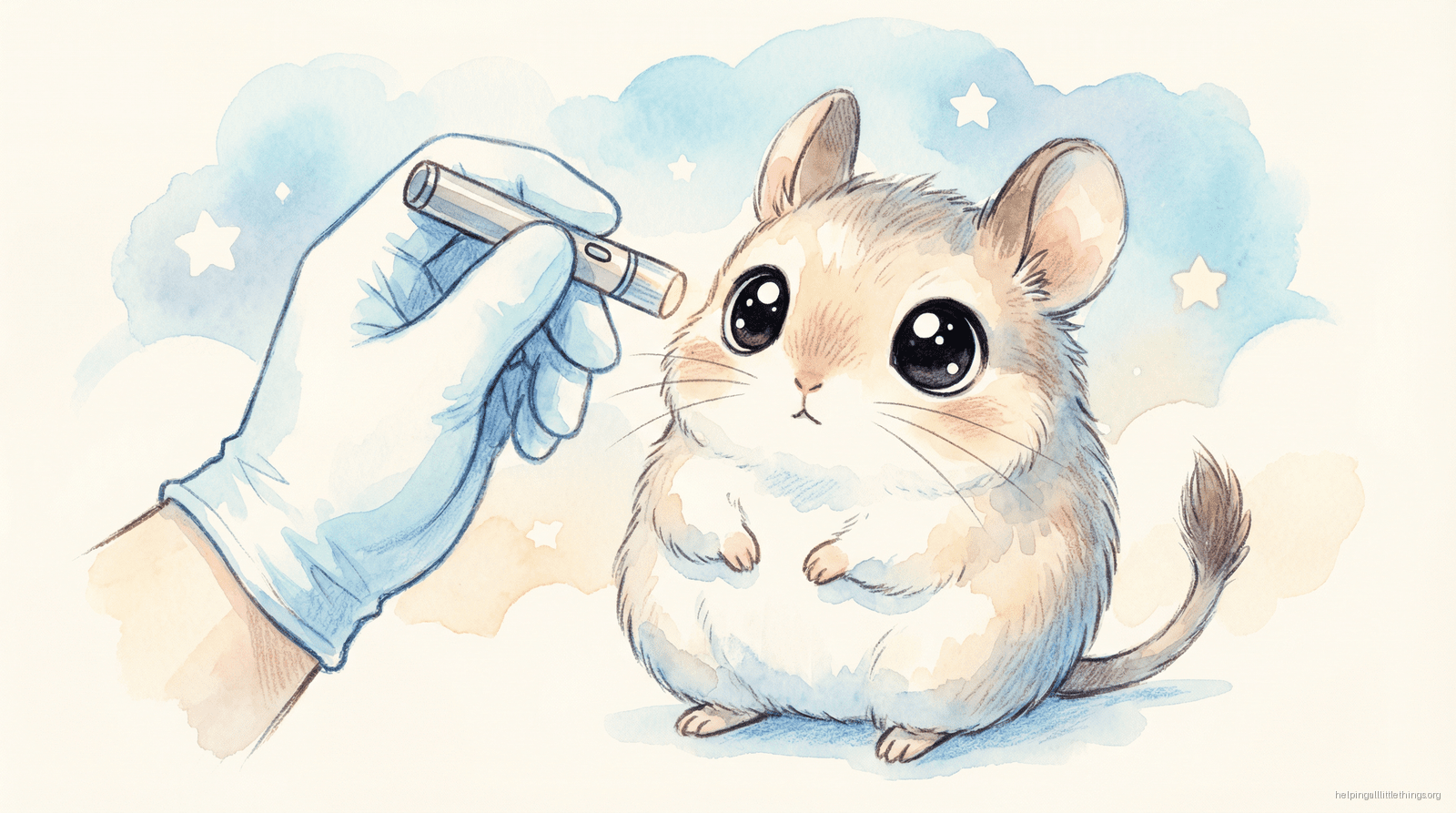
Share this infographic:

Eye problems are relatively common in degus and can range from simple injuries to serious indicators of systemic disease. For degus, the most significant eye concern is the development of cataracts, which is almost always a sign of diabetes. A vigilant owner who checks their degu's eyes regularly can catch health problems early.
Cataracts and Diabetes
A cataract is a clouding of the lens of the eye, which obstructs vision and can lead to blindness. In degus, the primary cause of cataracts is diabetes mellitus.
- Cause: Degus are naturally intolerant of sugar. Their bodies are not designed to process it. A diet that contains sugar—from fruits, sugary vegetables (like carrots or corn), or low-quality food mixes with molasses—leads to high blood sugar levels (hyperglycemia). This excess sugar damages the lens of the eye, causing it to become cloudy.
- Signs: You will notice a white, opaque, or bluish appearance in the center of your degu's eye(s). This can develop very quickly, sometimes seemingly overnight. The degu may become more hesitant in its movements or startle more easily as its vision deteriorates.
- Action: If you see a cataract developing, it is a sign that your degu is diabetic. A veterinary visit is important to confirm the diagnosis and discuss management. While the cataract itself is irreversible, the underlying diabetes must be managed through a strict, sugar-free diet to prevent further health complications.
Other Common Eye Issues
-
Eye Injuries / Corneal Ulcers:
- Cause: Degus are active and live in groups, and eye injuries can happen. A poke from a piece of hay or a small scratch from a cagemate can cause a corneal ulcer (an abrasion on the surface of the eye).
- Signs: The degu will be in pain, holding the eye shut or squinting. The eye may look cloudy and will likely be weeping.
- Action: This requires an immediate veterinary visit. The vet will use a special stain to diagnose the ulcer and will prescribe antibiotic eye drops to prevent infection and allow the eye to heal.
-
Weepy Eye (Epiphora):
- Cause: A persistently watery eye is often not a primary eye problem, but a secondary sign of dental disease. The roots of the upper teeth sit just below the tear duct. When the teeth become overgrown due to an improper diet, the roots can press on and block the tear duct, causing tears to spill out onto the face.
- Signs: A constantly wet or crusty appearance of the fur around one or both eyes.
- Action: A weepy eye warrants a veterinary investigation into the degu's dental health. Skull x-rays are often needed to check for overgrown tooth roots.
-
Conjunctivitis:
- Cause: An inflammation of the pink tissue around the eye, which can be caused by environmental irritants (like a dusty bedding or dust bath) or a bacterial infection.
- Signs: Redness, swelling, and puffiness of the eye area, sometimes with a discharge.
- Action: A vet can prescribe medicated eye drops to resolve the inflammation or infection. It's also important to ensure the cage environment is clean and dust-free.
Prevention
- Strict Sugar-Free Diet: This is the most critical step to prevent the diabetes that leads to cataracts. Feed a high-quality pellet and unlimited hay. Do not feed any fruit or sugary vegetables.
- Proper Hay-Based Diet: A diet high in hay is also essential for preventing the dental disease that causes weepy eyes.
- Safe Environment: Remove any sharp or dangerous objects from the cage that could cause an eye injury.
- Low-Dust Bedding: Use a low-dust bedding like aspen or paper-based products to prevent irritation.
Regularly looking at your degu's eyes is a simple and effective way to monitor their health. Any cloudiness, discharge, or squinting should prompt a call to your veterinarian.