Dangerous Treats and Toys for Chinchillas
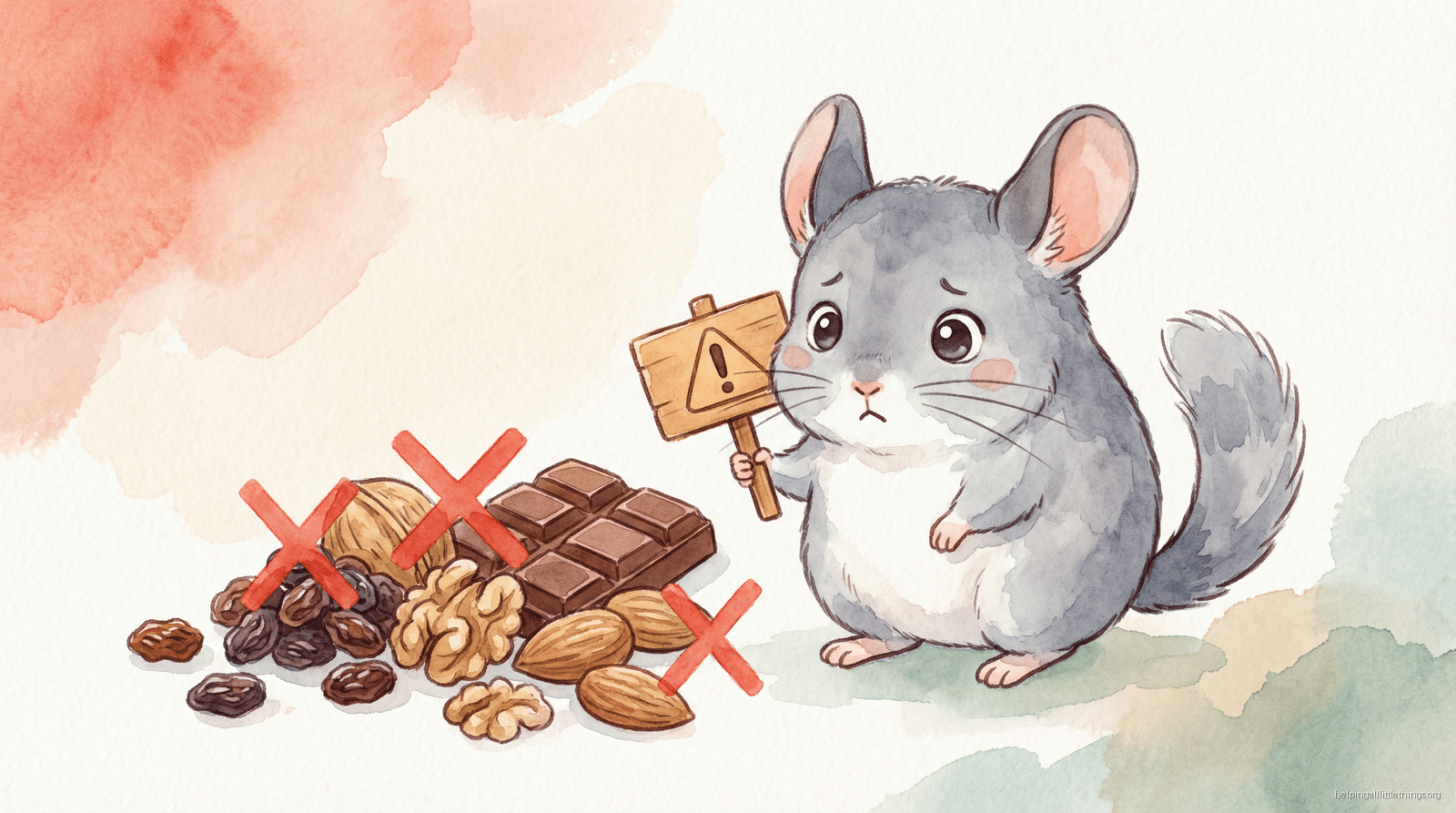

Chinchillas have incredibly sensitive digestive systems and continuously growing teeth, which makes them particularly vulnerable to the dangers of improper treats and toys. Providing safe and appropriate items for enrichment and chewing is essential, but it is just as important to know what to avoid. Many items marketed for chinchillas in pet stores are inappropriate or outright dangerous.
Dangerous Treats
A chinchilla's digestive tract is designed for a high-fiber, low-sugar diet. Anything that deviates from this can cause serious problems like GI stasis, bloat, and long-term health issues.
Absolutely to Avoid:
- Fruits and Vegetables: With very few exceptions (like a single, unsweetened raisin or a rose hip given once a week), fruits and vegetables are too high in sugar and water. They can easily cause life-threatening bloat or diarrhea.
- Nuts and Seeds: These are far too high in fat for a chinchilla's system. Sunflower seeds, peanuts, and other nuts should never be given.
- Commercial "Yogurt Drops" and Sugary Treats: These are pure sugar and are extremely dangerous. They offer no nutritional value and are a primary cause of digestive upset.
- Anything with Honey or Molasses: Many commercial seed sticks and treat bars are held together with honey or molasses. These are pure sugar and must be avoided.
- Dairy and Animal Products: Chinchillas are herbivores and cannot digest lactose or animal proteins.
| Unsafe Treat Category | Why It's Dangerous |
|---|---|
| Fruits & Vegetables | High sugar and water content; risk of bloat/diarrhea. |
| Nuts & Seeds | Too high in fat; can cause digestive upset. |
| Yogurt Drops | Pure sugar; no nutritional value; high risk of GI stasis. |
| Seed/Honey Sticks | High in sugar and fat; unhealthy. |
| Dairy/Animal Products | Chinchillas are herbivores and cannot digest them. |
Dangerous Toys and Chews
Chinchillas must chew to keep their teeth worn down, but the materials they chew on must be safe.
-
Plastic Toys: Chinchillas can easily chew off and ingest small pieces of plastic. This can cause a fatal internal blockage (impaction). Never give a chinchilla plastic toys. This includes plastic houses and cage accessories. The only exception is a solid, durable exercise wheel with no chewable edges.
-
Unsafe Woods: Not all woods are safe for chinchillas. Some woods are toxic, while others (like non-kiln-dried pine) contain harmful aromatic oils (phenols).
- Toxic Woods to Avoid: Cedar, cherry, citrus woods (orange, lemon), redwood, and any wood that has been painted, stained, or treated.
- Safe Woods: Kiln-dried pine, aspen, apple, and willow are safe choices.
-
Cardboard with Glue/Ink: While plain cardboard tubes are generally safe, be cautious of cardboard with heavy dyes, inks, or adhesives, which can be toxic if ingested in large quantities.
-
"Snak Shak" and Edible Logs: These products are made of sawdust and honey/sugar, making them dangerous on two fronts. The sugar is bad for their digestion, and the sawdust can cause blockages if ingested.
-
Mineral Wheels and Lava Blocks: While not acutely dangerous, these are unnecessary and can cause health problems if a chinchilla consumes too much. They are a source of excess minerals. A healthy diet of hay and pellets provides all the minerals a chinchilla needs. Plenty of safe wood chews should be provided for dental health instead.
When in doubt, the safest approach is to stick to the basics: unlimited high-quality hay, a measured amount of plain pellets, and a variety of safe wood chews. A chinchilla's health depends on this diligence.