Urinary & Bladder Health in Chinchillas
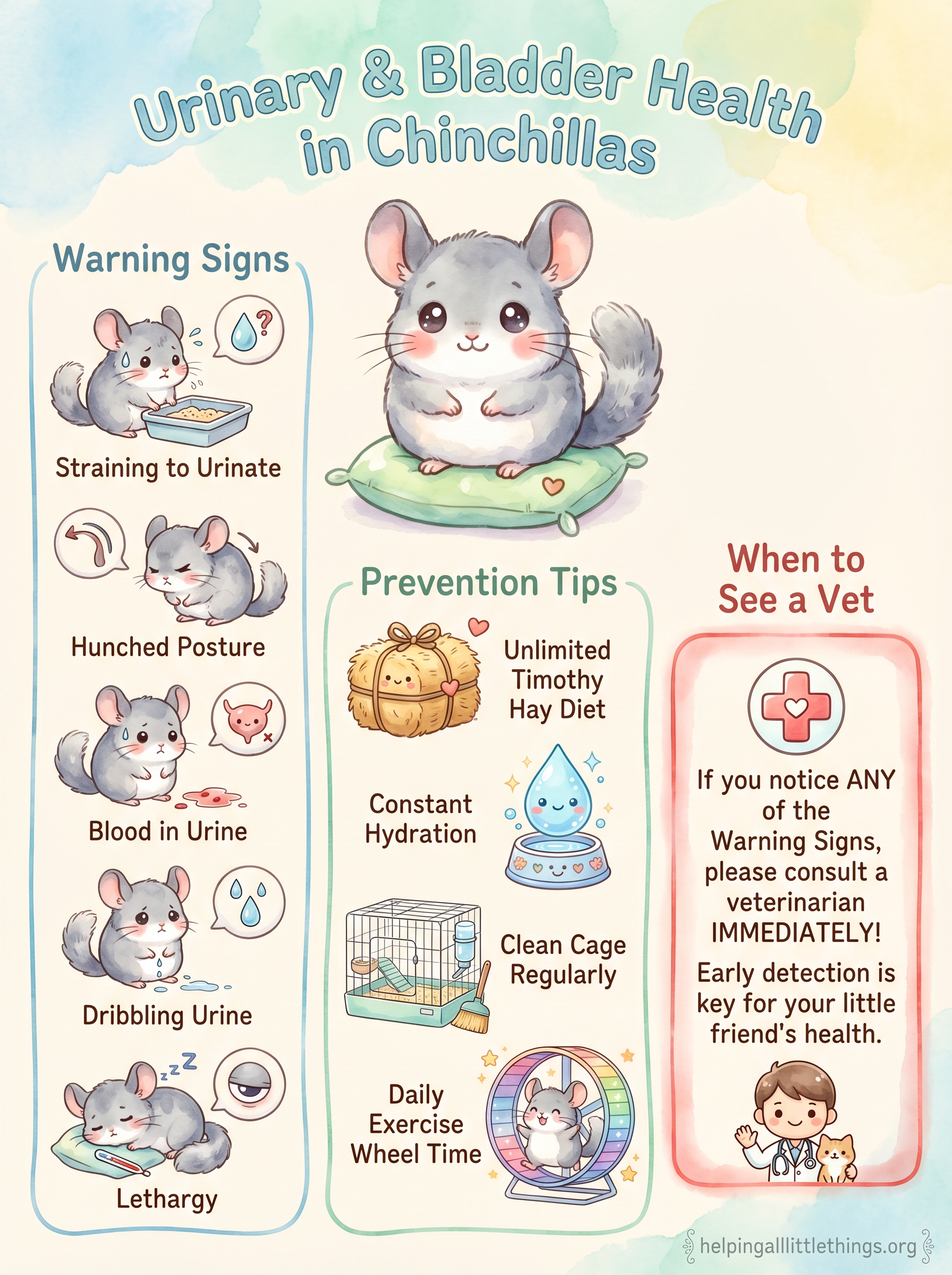

Urinary and bladder problems are among the more serious health concerns in chinchillas, and they can escalate quickly if left untreated. Because chinchillas are prey animals that instinctively hide signs of illness, urinary issues are often not noticed until they have become quite advanced. Understanding what to look for — and how to prevent problems from developing in the first place — is an important part of responsible chinchilla ownership.
How the Chinchilla Urinary System Works
Chinchillas have the same basic urinary anatomy as other mammals: two kidneys that filter waste from the blood, a bladder that stores urine, and a urethra through which urine is expelled. Male chinchillas also possess an os penis (a small bone within the penis), which is relevant when considering the risk of urethral blockage from stones.1
One important distinction between chinchillas and some other small pets is how they handle calcium. Rabbits and guinea pigs excrete excess calcium primarily through their urine, which is why their urine often appears cloudy or chalky. Chinchillas, by contrast, excrete excess calcium primarily through their feces rather than their urine.2 This means that while chinchilla urine is not normally the main route for calcium removal, urinary calcium deposits can still develop — particularly when diet and hydration are suboptimal.
Normal chinchilla urine ranges in colour from pale yellow to deep orange, and this variation is entirely normal and reflects hydration levels. Do not mistake concentrated orange urine for blood.
Common Urinary Conditions
Urinary Tract Infections (UTIs)
A urinary tract infection occurs when bacteria — most commonly from fecal contamination in a dirty cage — colonise the urethra and travel upward into the bladder and potentially the kidneys.3 UTIs are painful, can progress rapidly, and can be fatal if bacteria enter the bloodstream (sepsis).
Causes: Poor cage hygiene is the primary risk factor. Soft or runny droppings increase risk significantly, as the bacteria in loose feces can spread more easily to the urogenital area.
Symptoms:
| Symptom | Notes |
|---|---|
| Straining to urinate | Chinchilla attempts to urinate repeatedly but produces little or nothing |
| Hunched posture | A sign of abdominal or pelvic pain |
| Ears held flat | A general pain indicator in chinchillas |
| Dribbling urine | Urine leaking unexpectedly, often wetting the fur around the genitals |
| Blood in urine | Visible red or pink tinge; confirm by observing fresh urine directly |
| Lethargy and reduced appetite | Later-stage symptoms indicating the infection is progressing |
| Swelling or redness around genitals | Indicates significant inflammation |
Early-stage UTIs, caught when the primary symptoms are straining and pain, respond well to antibiotic treatment. Later-stage symptoms — lethargy, swelling, hair loss around the genitals — indicate a more serious infection requiring urgent veterinary care.3
Do not attempt home remedies such as cranberry juice. Chinchillas cannot safely consume fruit juice, and home treatment delays the veterinary care that is genuinely necessary. UTIs require prescription antibiotics.
Bladder Sludge
Bladder sludge refers to an accumulation of calcium carbonate crystals that settle in the bladder, forming a thick, gritty sediment. It is less acute than a bladder stone but can cause significant discomfort and predispose the animal to UTIs and stone formation.2
Sludge is thought to develop when calcium intake is high, water intake is low, or the animal is insufficiently active — all of which are common in domestic chinchillas fed diets heavy in pellets and alfalfa hay, with limited access to fresh water.
Signs of bladder sludge overlap with UTI symptoms: straining to urinate, blood in the urine, frequent attempts to urinate, and visible gritty white or chalky deposits in the urine or on cage surfaces beneath where the chinchilla urinates.
Urolithiasis (Bladder and Kidney Stones)
Urolithiasis is the formation of solid mineral stones within the urinary tract. Bladder stones are more common than kidney stones in chinchillas. The stones are typically composed of calcium carbonate or calcium oxalate.1
The symptoms of bladder stones are essentially identical to those of a UTI — straining, blood in urine, pain, and lethargy — which is why veterinary diagnosis is essential. Antibiotics prescribed for a presumed UTI will have no effect on a stone, and a stone can damage the lining of the bladder and urethra as it moves, creating secondary infection.
Diagnosis typically involves radiography (X-ray) or ultrasound. Small stones may pass on their own with increased hydration and supportive care; larger stones generally require surgical removal.
There is some discussion in the veterinary community about a possible genetic predisposition to sludge and stone formation in certain chinchilla lines, but this has not been scientifically validated as of current literature.2
Diagnosis
If you observe any of the warning signs above, seek veterinary care promptly. Your vet will likely perform:
- Urinalysis — to check for bacteria, blood, crystals, and pH
- Urine culture and sensitivity — to identify the specific bacteria causing a UTI and determine the most effective antibiotic
- Radiography or ultrasound — to identify stones or sludge in the bladder or kidneys
- Blood panel — in more serious cases, to assess kidney function and check for signs of systemic infection
Treatment
| Condition | Treatment |
|---|---|
| UTI | Prescription antibiotics (e.g., trimethoprim-sulfa, enrofloxacin) for 7–14 days; pain management; improved cage hygiene |
| Bladder sludge | Increased water intake; dietary adjustment (reduce alfalfa, increase timothy hay); pain management; in severe cases, manual expression or flushing under anaesthesia |
| Small bladder stones | Increased hydration; dietary management; monitoring; may pass spontaneously |
| Large bladder stones | Surgical removal (cystotomy); post-operative antibiotics and pain management |
Prevention
Prevention is far more effective than treatment for urinary conditions. The following measures significantly reduce risk:
Diet: Feed a high-quality timothy hay as the primary diet (80–90% of intake). Limit alfalfa hay, which is high in calcium, to young chinchillas under 6 months or pregnant/nursing females. Avoid high-calcium treats and pellets with added calcium supplements.2
Hydration: Ensure fresh, clean water is always available. Some chinchillas prefer a water bowl to a bottle; offering both can increase water intake. Adequate hydration is the single most effective way to prevent sludge and stone formation.
Cage hygiene: Clean the cage thoroughly at least once a week. Spot-clean soiled bedding daily. A clean environment dramatically reduces the bacterial load that causes UTIs.
Exercise: Regular out-of-cage exercise supports healthy organ function and reduces the risk of sedentary-related sludge formation.
Routine veterinary checks: An annual wellness exam with a chinchilla-experienced exotic vet can catch early signs of urinary issues before they become serious.
When to Seek Emergency Care
The following symptoms warrant same-day emergency veterinary attention:
- Complete inability to urinate for more than a few hours
- Visible blood in urine combined with lethargy
- Swollen, distended abdomen
- Collapse or unresponsiveness
A blocked urethra — more common in males due to their longer, narrower urethra — is a life-threatening emergency that can be fatal within hours.
Cross-References
- Chinchilla GI Health — digestive health and its relationship to urinary health
- Chinchilla Nutrition and Diet — dietary guidance for preventing calcium-related issues
- Home Health Care for Chinchillas — how to monitor your chinchilla's health at home
- Common Health Issues in Chinchillas — overview of health conditions to watch for