Understanding Chinchilla Droppings
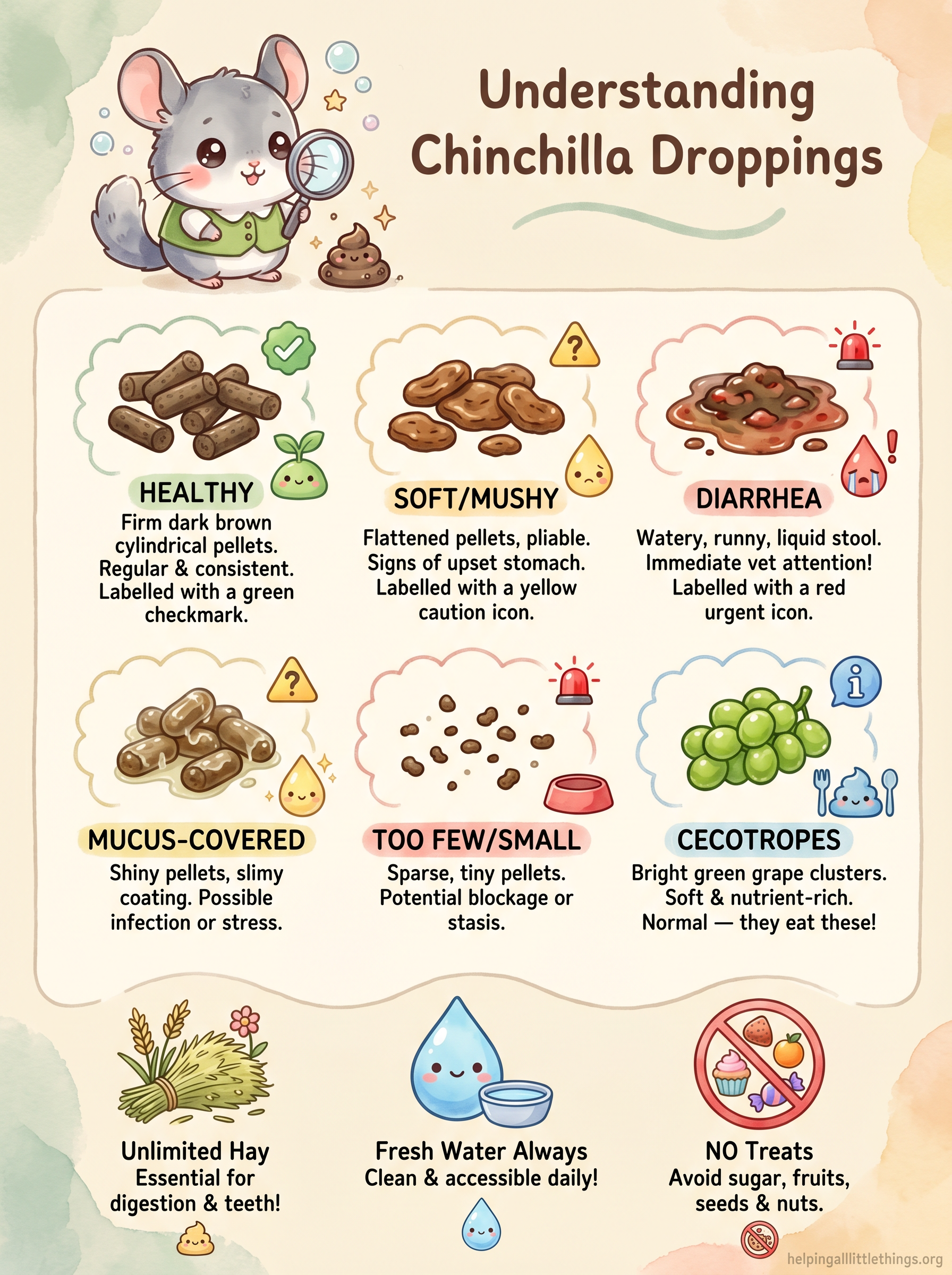

Monitoring your chinchilla's droppings is one of the most practical and reliable ways to track their health. Because chinchillas are prey animals that instinctively hide signs of illness, changes in their droppings are often among the first — and sometimes the only — visible indicators that something is wrong. Getting into the habit of glancing at the cage floor during daily spot-cleaning takes only seconds and can make a significant difference in catching problems early.
What Normal Chinchilla Droppings Look Like
A healthy chinchilla produces 50 to 300 droppings per day — this is entirely normal and reflects the high-fibre diet and rapid digestive transit time of these small herbivores.1 You should expect to see a generous scatter of pellets throughout the cage at all times.
| Characteristic | Normal |
|---|---|
| Shape | Cylindrical with rounded ends |
| Colour | Dark brown, brown, or dark green |
| Texture | Firm and dry |
| Odour | Virtually odourless |
| Size | Small and consistent; roughly the size of a grain of rice |
The dark green colour is normal and reflects the high chlorophyll content of hay and pellets. Colour can vary slightly from day to day depending on what your chinchilla has eaten, but the shape and texture should remain consistent.
Establish a baseline for your individual chinchilla's normal droppings early on. This makes it much easier to notice when something changes.
Cecotropes: The "Other" Droppings
Chinchillas, like rabbits and guinea pigs, practice coprophagia — the deliberate consumption of a specific type of dropping called a cecotrope (also called a cecotroph or "night feces").2 This is entirely normal and is not a sign of illness or poor husbandry.
Cecotropes are produced in the cecum (a specialised section of the large intestine) and are distinct from regular fecal pellets. They are:
- Softer and stickier than regular droppings
- Bright green in colour
- Clustered together in grape-like bunches
- Rich in protein, B vitamins, and beneficial gut bacteria
Chinchillas typically consume cecotropes directly from the anus, often at night or in the early morning, which is why most owners never see them. If you do find cecotropes in the cage, it may indicate that your chinchilla is consuming more than their body requires (often related to a diet too high in protein or carbohydrates) or that they are unable to reach them due to obesity or a physical limitation.
Finding the occasional cecotrope in the cage is not cause for concern. Finding them regularly suggests a dietary review may be worthwhile.
Abnormal Droppings: What Changes Mean
Soft or Mushy Droppings
Soft, sticky, or mushy droppings that do not hold their shape are one of the most common issues chinchilla owners encounter. They indicate that something is disrupting the balance of the gut microbiome or the digestive process.
Common causes include:
- A recent change in diet
- Too many sugary treats or fresh foods
- Antibiotic use (which disrupts beneficial gut bacteria)
- Stress (from a new environment, a new cage mate, or changes in routine)
- Early-stage GI infection
If soft droppings persist for more than 24–48 hours, or are accompanied by other symptoms such as reduced appetite or lethargy, consult a veterinarian. Soft droppings that are not addressed can progress to diarrhea, which can cause dangerous dehydration in a small animal very quickly.1
Diarrhea
True diarrhea — watery, formless, or liquid droppings — is a medical emergency in chinchillas. It causes rapid dehydration and can be fatal within hours in severe cases. Do not wait to see if it resolves on its own; seek veterinary care immediately.
Causes of diarrhea include bacterial infection (such as Listeria monocytogenes or Salmonella), viral infection, parasitic infection (such as Giardia), or severe dietary disruption.3
Mucus-Covered Droppings
A slimy or mucus-coated appearance on droppings indicates irritation or inflammation in the gastrointestinal tract. This can result from:
- Dietary imbalance (too much water-rich food or too many treats)
- Bacterial infection
- Stress-induced gut dysbiosis
- Insufficient fibre in the diet
Mucus-covered droppings warrant a veterinary visit, particularly if they persist or are accompanied by other symptoms.
Very Small or Fewer Droppings
A significant reduction in the number of droppings, or droppings that are noticeably smaller than usual, is a warning sign of GI slowdown or stasis. GI stasis occurs when the normal muscular contractions that move food through the digestive tract slow down or stop. It can be triggered by pain, stress, dehydration, or a low-fibre diet, and it can become life-threatening if the gut stops moving entirely.3
Signs accompanying reduced droppings include:
- Reduced or absent appetite
- Hunched posture
- Reluctance to move
- Audible gut sounds that are absent or reduced (a vet can assess this)
GI stasis requires prompt veterinary treatment, which typically includes pain management, fluid therapy, gut motility drugs, and syringe feeding.
No Droppings at All
Complete absence of droppings is a veterinary emergency. It indicates either a complete digestive shutdown (GI stasis) or an intestinal blockage. Do not wait — seek emergency care immediately.
Droppings with Visible Blood
Blood in or on droppings — visible as red streaking or a dark, tarry appearance — can indicate intestinal bleeding, rectal injury, or a serious infection. This warrants same-day veterinary attention.
Unusually Large or Misshapen Droppings
Droppings that are significantly larger than normal, oddly shaped, or have an irregular surface can indicate changes in gut motility or dietary issues. Monitor closely and consult a vet if the change persists.
Quick Reference: Dropping Changes at a Glance
| What You See | Likely Cause | Action |
|---|---|---|
| Soft, sticky droppings | Diet change, treats, stress, antibiotics | Remove treats, review diet; vet if persists >48 hrs |
| Watery diarrhea | Bacterial/viral/parasitic infection | Vet immediately |
| Mucus-coated droppings | GI irritation, infection, stress | Vet visit if persists |
| Fewer/smaller droppings | GI slowdown, pain, dehydration | Vet visit promptly |
| No droppings | GI stasis or blockage | Emergency vet immediately |
| Blood in droppings | Intestinal bleeding or injury | Same-day vet visit |
| Bright green clusters (cecotropes) | Normal cecotrope production | Normal — no action needed |
| Cecotropes left uneaten in cage | Diet too rich; physical limitation | Review diet; check for mobility issues |
Supporting Healthy Digestion
The best way to keep your chinchilla's droppings healthy is to support their digestive system through proper diet and husbandry:
- Timothy hay should make up 80–90% of the diet. The long fibres of grass hay are essential for maintaining healthy gut motility and preventing GI stasis.
- Limit pellets to a small daily portion (1–2 tablespoons for an adult chinchilla) of a high-quality, low-sugar chinchilla pellet.
- Avoid sugary treats — raisins, dried fruit, and sugary commercial treats disrupt gut bacteria and cause soft droppings.
- Ensure fresh water is always available. Dehydration slows gut motility.
- Minimise stress. Stress is a significant trigger for digestive upset in chinchillas.
- Introduce dietary changes gradually over 7–10 days to allow the gut microbiome to adjust.
Cross-References
- Chinchilla GI Health — detailed guide to gastrointestinal conditions in chinchillas
- Chinchilla Nutrition and Diet — what to feed and what to avoid
- Home Health Care for Chinchillas — daily health monitoring at home
- Common Health Issues in Chinchillas — overview of conditions to watch for