Understanding Chinchilla Behavior: A Guide for Owners
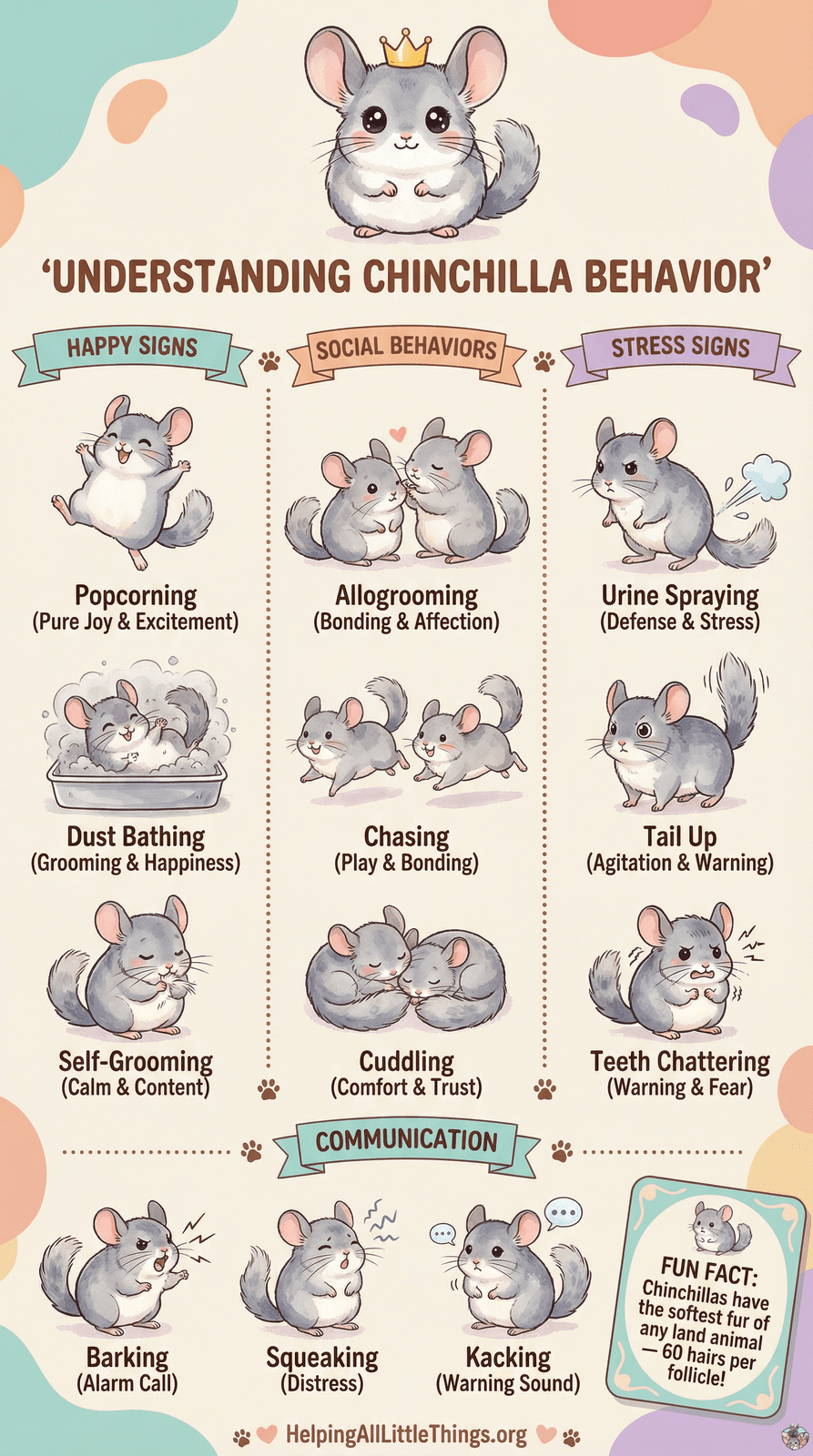

Chinchillas are active, curious animals with a surprisingly rich behavioral repertoire. They are crepuscular — most active at dawn and dusk — and can live for 15 years or more, making understanding their behavior a long-term investment in your relationship. Chinchillas are prey animals and can be cautious with new people, but with patience they become wonderfully interactive companions.
Common Chinchilla Body Language
| Behavior | Common Meaning(s) | Context & Interpretation |
|---|---|---|
| Popcorning / Jumping | Joy, Excitement | Like guinea pigs, chinchillas will leap and bounce when happy. Seeing your chinchilla zoom and jump around their enclosure is a wonderful sign. |
| Dust Bathing | Grooming, Happiness | Chinchillas need to roll in volcanic dust to keep their incredibly dense fur clean and healthy. A chinchilla that enthusiastically rolls and flips in their dust bath is content and well-cared-for. |
| Standing Upright | Alert, Curious | A chinchilla standing on their hind legs is alert and curious about their environment. |
| Fur Slip | Extreme Fear, Defensive | When extremely frightened or roughly handled, a chinchilla can release a patch of fur as a defense mechanism. This is called a fur slip. It is painless but signals that the animal was severely stressed. Handle chinchillas gently and never grab their fur. |
| Teeth Chattering | Warning, Aggression | Teeth chattering is a clear warning signal. Back off and give the chinchilla space. |
| Grooming You | Affection, Trust | A chinchilla that nibbles or grooms your fingers or hair has accepted you as part of their social group. |
| Hiding | Fear, Stress | While chinchillas naturally use hides, a chinchilla that refuses to come out and is unresponsive to food may be ill or severely stressed. |
Common Chinchilla Vocalizations
| Sound | Common Meaning(s) | Context & Interpretation |
|---|---|---|
| Barking | Alarm, Warning | A loud, sharp bark is a chinchilla's alarm call. It signals perceived danger and will often trigger other chinchillas to take cover. |
| Squeaking | Excitement, Distress | Short squeaks can indicate excitement. Prolonged squeaking signals distress or pain. |
| Teeth Chattering | Warning, Aggression | A warning to back off. |
| Cooing | Contentment, Affection | Soft cooing sounds between bonded chinchillas or toward a trusted human signal contentment and affection. |
Social Behavior
Chinchillas are social animals that benefit from living in same-sex pairs or groups. A bonded pair will groom each other, sleep together, and play together. However, introductions must be done carefully — chinchillas are territorial and can injure each other if introduced incorrectly.
Signs of a well-bonded pair include mutual grooming, sleeping side by side, and playing together without persistent chasing or fighting.
Signs of a Happy and Healthy Chinchilla
A happy chinchilla is active during their natural waking hours, curious, and eager to explore and play. They will dust bathe enthusiastically, jump and climb, and interact with their companions. Their coat should be dense and smooth, their eyes bright, and their weight stable.
Signs of Stress, Fear, or Pain
- Fur slip (sudden patch of missing fur)
- Hunched posture, reluctance to move
- Dull or matted coat
- Loss of appetite or weight loss
- Excessive hiding or lethargy
- Labored breathing or open-mouth breathing (emergency)
Chinchillas are extremely sensitive to heat. Temperatures above 75°F (24°C) can cause fatal heatstroke. Always ensure their environment is cool and well-ventilated.
References
[1] Chewy. (2023). Chinchilla Sounds and What They Mean. Retrieved from https://www.chewy.com/education/small-pet/chinchilla/chinchilla-sounds