Parasites & Ringworm in Chinchillas
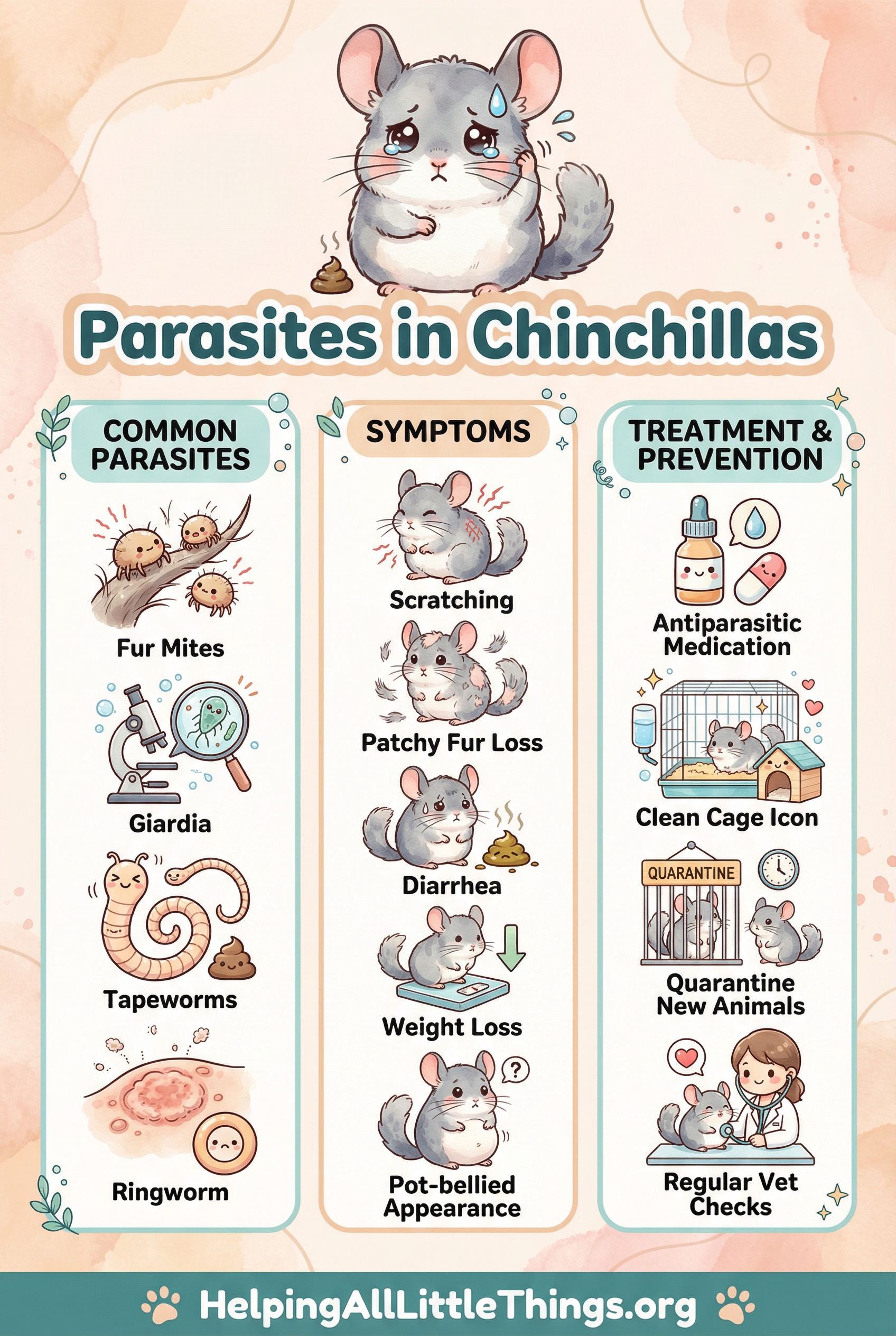

Chinchillas are naturally resistant to many common external parasites thanks to their incredibly dense fur — it is very difficult for fleas or mites to navigate the thick coat and reach the skin. However, chinchillas can still be affected by certain internal and external parasites, as well as the fungal infection ringworm, all of which can cause significant health problems if left untreated.
Types of Parasites
External Parasites
External parasites live on the skin and fur of your chinchilla, causing irritation, itching, and hair loss.
Fur mites (Chirodiscoides caviae and related species) are the most commonly encountered external parasite in chinchillas. These microscopic mites live in the fur and can cause intense itching, patchy fur loss, and skin irritation. They are not always visible to the naked eye and require veterinary diagnosis.1
Fleas can infest chinchillas, particularly in multi-pet households where cats or dogs are present. Flea bites cause itching and discomfort, and heavy infestations can cause anaemia in small animals. You may notice flea dirt (small black specks) near the less dense fur around the ears.
Lice are species-specific and chinchillas will not contract lice from humans or other species. Chinchilla lice cause itching, hair loss, and general discomfort.
Internal Parasites
Internal parasites live within the gastrointestinal tract or other organs.
Giardia (Giardia duodenalis) is a protozoan parasite that infects the small intestine. It is spread through contaminated water or food and causes diarrhea, weight loss, and dehydration. Giardia can be difficult to diagnose without specific fecal testing.2
Coccidia (Eimeria spp.) are intestinal protozoa that can cause diarrhea, weight loss, and poor growth, particularly in young or immunocompromised chinchillas.
Intestinal worms (roundworms, tapeworms) are rare in chinchillas but can occur, particularly in animals with outdoor access or exposure to contaminated environments.
Ringworm (A Fungal Infection)
Despite its name, ringworm is not a worm or a parasite — it is a fungal infection of the skin caused by dermatophyte fungi. It is one of the more common skin ailments seen in chinchillas.
The fungus thrives in warm, humid environments, and stress can make a chinchilla more susceptible. The classic sign is patches of hair loss, often in a circular pattern, typically on the nose, face, and paws. The underlying skin may be flaky and crusty.
Ringworm is contagious to other animals and to humans. If you notice circular patches of hair loss, wear gloves when handling your chinchilla and seek veterinary diagnosis promptly.
Warning Signs
| Parasite / Condition | Signs to Watch For |
|---|---|
| Fur mites | Excessive scratching, patchy fur loss, red or irritated skin |
| Fleas | Visible insects in fur, flea dirt (black specks), scratching |
| Lice | Visible nits on fur shafts, scratching, dull coat |
| Giardia | Soft or watery diarrhea, weight loss, reduced appetite |
| Coccidia | Diarrhea, lethargy, poor growth in young chinchillas |
| Intestinal worms | Weight loss, pot-bellied appearance, visible worms in feces |
| Ringworm | Circular patches of hair loss on nose, face, or paws; flaky skin |
Any chinchilla showing signs of diarrhea, significant weight loss, or skin irritation should be examined by a veterinarian experienced in exotic pets. Many parasites require specific testing to diagnose and prescription medication to treat.
Diagnosis
Diagnosis depends on the type of parasite or condition suspected:
- Skin scraping or tape test — for mites and lice
- Fecal flotation or direct smear — for intestinal worms and coccidia
- Fecal PCR or ELISA test — for Giardia, which requires specific testing as it is often missed on routine fecal floats2
- Examination under magnification — for fleas and visible external parasites
- Fungal culture or Wood's lamp examination — for ringworm
Treatment
Treatment must always be prescribed and supervised by a veterinarian, as many over-the-counter parasite treatments are toxic to chinchillas:
| Parasite / Condition | Treatment |
|---|---|
| Fur mites | Ivermectin or selamectin (Revolution/Stronghold) — vet prescribed |
| Fleas | Selamectin spot-on — vet prescribed; treat all household pets and environment |
| Lice | Ivermectin or selamectin — vet prescribed |
| Giardia | Metronidazole or fenbendazole — vet prescribed |
| Coccidia | Trimethoprim-sulfa — vet prescribed |
| Intestinal worms | Fenbendazole — vet prescribed |
| Ringworm | Oral or topical antifungal medication — vet prescribed; thorough cage disinfection required |
Never use flea powders, sprays, or collars designed for cats or dogs on chinchillas. Many common flea products contain permethrin or other pyrethroids that are highly toxic to small mammals and can be fatal.
Environmental treatment is also essential for external parasites and ringworm — the enclosure, bedding, and any soft furnishings should be thoroughly cleaned and treated to prevent reinfestation or reinfection.
Prevention
- Quarantine new chinchillas for at least 4 weeks before introducing them to resident animals
- Source chinchillas from reputable breeders who maintain clean, parasite-free colonies
- Use clean, dust-free bedding from reputable sources; avoid bedding that may have been contaminated
- Provide fresh, clean water daily to reduce the risk of waterborne parasites like Giardia
- Keep the environment cool and dry — high humidity encourages ringworm fungus
- Wash hands before and after handling chinchillas
- Schedule annual vet check-ups including fecal testing
For more on keeping your chinchilla healthy, see our article on Home Health Care for Your Chinchilla.