Introducing and Bonding Chinchillas
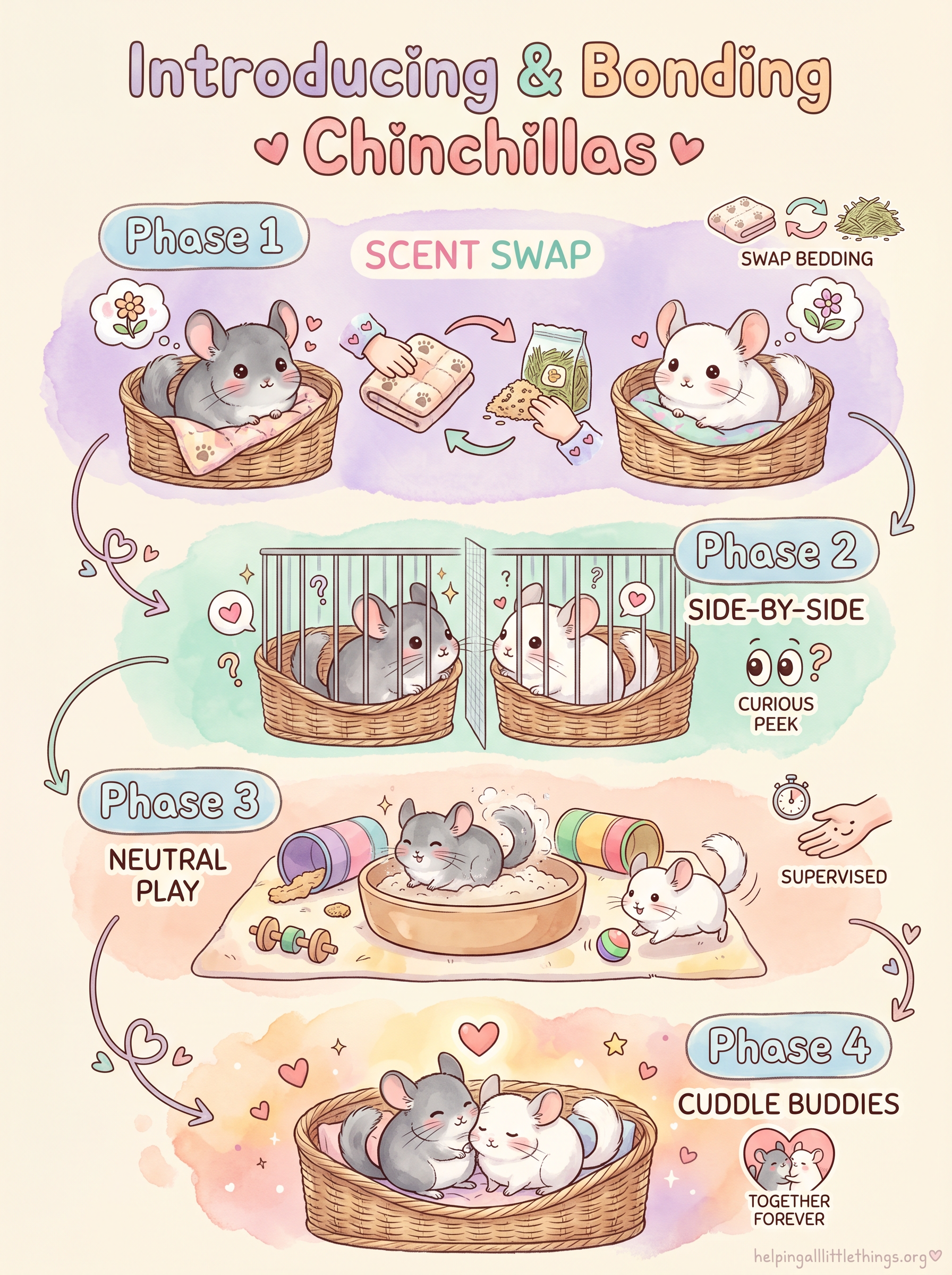

Chinchillas are naturally social animals. In the wild, they live in colonies called herds or colonies of up to 100 individuals, and they benefit enormously from the companionship of their own kind.1 A solitary chinchilla can become bored, stressed, and even depressed — particularly if their human family is not able to provide several hours of interaction each day. For this reason, most chinchilla welfare experts recommend keeping them in same-sex pairs or small groups wherever possible.
That said, chinchillas are also territorial and can be aggressive toward unfamiliar animals. Introductions must be handled with patience and a structured approach. Rushing the process is one of the most common reasons bonding attempts fail.
Before You Begin: Quarantine
The single most important step before any introduction is a mandatory quarantine period of 30 to 45 days.2 Any new chinchilla — regardless of where it came from — should be housed in a completely separate room from your existing chinchilla during this time. This protects both animals from the transmission of respiratory infections, ringworm, parasites, and other contagious conditions that may not be immediately visible.
During quarantine, schedule a full veterinary check-up for the new arrival. Both chinchillas should be in good health before introductions begin.
Pairing Considerations
Not all chinchillas are equally compatible. Several factors influence the likelihood of a successful bond.
| Factor | Guidance |
|---|---|
| Sex pairing | Same-sex pairs (especially female–female) tend to bond most successfully. Male–female pairs require neutering the male to prevent unwanted breeding. |
| Age | Chinchillas between 6 months and 2 years of age typically bond most readily. Introducing a young chinchilla to an older, established one often works well. |
| Personality | Pairing a timid chinchilla with a confident one can work, but two very dominant animals may clash repeatedly. |
| Background | Rescue chinchillas may need extra time and patience, particularly if they have had negative social experiences in the past. |
If you are adopting from a rescue, ask whether the chinchilla has previously lived with a companion. Animals with positive social histories often bond more easily.
The Four Phases of Introduction
Phase 1: Scent Introduction (Days 1–7)
The first phase is entirely about smell — the primary sense chinchillas use to assess one another. Keep the chinchillas in separate cages in different rooms, but begin swapping items between them daily:
- Exchange a small handful of bedding between cages each day.
- Rotate toys and hides between the two enclosures.
- After handling one chinchilla, go directly to the other without washing your hands, so each animal begins to associate the other's scent with something familiar and safe.
Watch for positive responses (curiosity, sniffing, normal eating and activity) versus concerning responses (aggressive barking, refusal to eat, fur chewing). Neutral responses — ignoring the new scent entirely — are also acceptable at this stage.
Phase 2: Visual Introduction (Days 7–14)
Once both chinchillas appear comfortable with each other's scent, move their cages into the same room, placed at least 1–2 inches apart — close enough to see and smell each other, but far enough that paws cannot reach through the bars.3 This gap is important: chinchillas can bite off toes if cages are placed too close together.
Observe their body language carefully during this phase.
| Body Language | Meaning |
|---|---|
| Relaxed posture, normal activity | Positive — continue at the current pace |
| Curious sniffing at the cage bars | Positive — interest without aggression |
| Teeth chattering, aggressive barking | Warning — slow down; do not proceed to Phase 3 yet |
| Fur puffing, stiff posture | Warning — one or both chinchillas is stressed |
| Popcorning (jumping for joy) | Very positive — a relaxed, happy animal |
Run 5–10 minute supervised sessions 2–3 times daily, gradually extending to 30-minute sessions as both animals remain calm.
Phase 3: Supervised Physical Introduction (Days 14–21)
The first physical meeting must take place in neutral territory — a space that neither chinchilla has previously occupied. A playpen, a thoroughly cleaned bathroom, or a large carrier all work well. The area should be easy to supervise, free of hiding spots where one animal could corner the other, and simple to clean between sessions.
Two techniques are particularly effective during this phase:
The split dust bath method involves placing both chinchillas in a shared dust bath for 2–3 minutes. The shared positive experience of bathing, combined with the neutral scent of the dust, can reduce tension significantly. Gradually extend the duration to 10 minutes over several sessions.4
Supervised playtime sessions should begin at 10–15 minutes and increase slowly. Stay within arm's reach at all times. If a fight breaks out, never use your hands to separate the animals — use a dustpan, a piece of cardboard, or a thick towel to avoid bites. After any significant altercation, return both chinchillas to their separate cages and allow a full day of rest before trying again.
Phase 4: Co-habitation
Co-habitation should only begin once both chinchillas are consistently sleeping near each other, grooming one another, and sharing food without conflict. This process can take anywhere from a few weeks to several months — there is no fixed timeline, and rushing this final step is the most common cause of bonding failure.
When moving them into a shared enclosure:
- Use a thoroughly cleaned cage that neither animal has previously lived in, or deep-clean the existing cage completely to remove territorial scent markers.
- Rearrange all hides, shelves, and toys so the layout is unfamiliar to both animals.
- Provide at least two of everything — two food bowls, two water bottles, two hides — to reduce competition.
- Monitor closely for the first 48–72 hours, checking in frequently even overnight if possible.
Signs of a successful bond include sleeping curled up together, mutual grooming, comfortable proximity, and shared play. These behaviours typically emerge gradually over the first few weeks of co-habitation.
When Bonding Fails
Not every pair of chinchillas will bond, and this is not a failure on your part. Some chinchillas are simply incompatible. Signs that a bond is unlikely to succeed include repeated, escalating fights, persistent fur pulling, significant weight loss in one or both animals, or one chinchilla being consistently bullied away from food and water.
If introductions have stalled after several weeks of careful attempts, consider:
- Extending the scent phase for another 1–2 weeks before attempting visual contact again.
- Consulting a chinchilla-experienced veterinarian or behaviourist for guidance.
- Accepting that the animals may need to live separately — some chinchillas genuinely prefer to be the sole animal in a household, and a well-enriched solo environment with plenty of human interaction is far preferable to a stressful forced pairing.
Never leave two chinchillas that are still in the introduction process unsupervised in the same space. Chinchilla fights can be extremely fast and serious, and injuries can occur in seconds.
Special Scenarios
Introducing a kit to an adult: Young chinchillas (under 6 months) are generally more readily accepted by adults, as they pose less of a territorial threat. However, monitor the adult carefully to ensure the kit is not being bullied away from food.
Senior chinchillas: Older animals may be less tolerant of change and may require a longer, slower introduction process. Be especially attentive to stress signs in a senior chinchilla during introductions.
Introducing more than two: Adding a third chinchilla to an established pair can disrupt an existing bond. If you wish to keep a trio, introduce all animals simultaneously rather than adding one to an established pair.
Cross-References
- Understanding Chinchilla Behavior — body language, vocalizations, and social signals
- Chinchilla Basic Care Guide — housing, enrichment, and daily care
- Home Health Care for Chinchillas — monitoring your chinchilla's health at home