Chinchilla Basic Care Guide
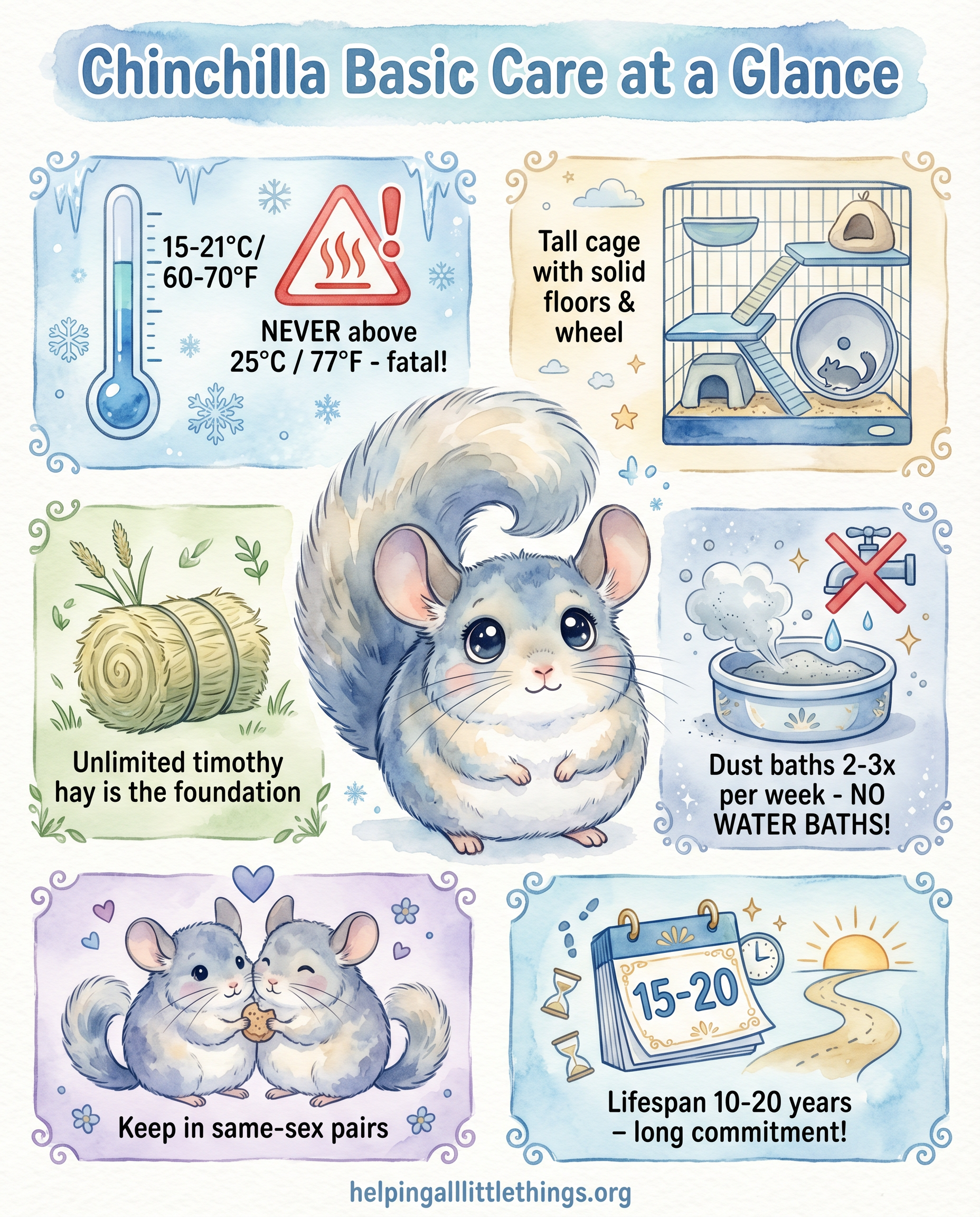
Chinchillas (Chinchilla lanigera) are captivating, intelligent rodents native to the Andes Mountains of South America. Their exceptionally dense, silky fur, curious personalities, and long lifespans — up to 15–20 years with proper care — make them rewarding companions for experienced small pet owners.1 However, chinchillas have highly specific care requirements that differ significantly from other small pets, and they are not recommended as first pets for children or first-time small animal owners.
This guide provides an overview of chinchilla care. Each topic links to a dedicated article with full detail.
Quick Reference: Chinchilla Care at a Glance
| Parameter | Requirement |
|---|---|
| Lifespan | 10–20 years |
| Social needs | Pairs or small groups strongly recommended |
| Ideal temperature | 15–21°C (60–70°F); fatal above 25°C (77°F) |
| Active hours | Crepuscular/nocturnal (most active at dawn and dusk) |
| Diet | Unlimited grass hay, limited pellets, minimal treats |
| Cage minimum | 90 cm × 60 cm × 120 cm tall (36" × 24" × 48") |
| Dust baths | 2–3 times per week |
| Vet type | Exotic small mammal veterinarian required |
Housing
Chinchillas are highly active and need a tall, multi-level cage that allows them to jump and climb. The minimum recommended cage size is 90 cm × 60 cm × 120 cm tall, though larger is always better.2 Cages should have solid or closely spaced wire floors — wire mesh flooring causes painful bumblefoot. Provide multiple wooden ledges, platforms, and a solid-surface wheel (minimum 30 cm / 12 inches diameter) for exercise.
Chinchillas are extremely sensitive to heat. Their thick fur, which provides insulation in the cold Andean highlands, makes them highly susceptible to heatstroke at temperatures above 25°C (77°F). Their environment must be kept between 15–21°C (60–70°F) at all times, away from direct sunlight, heating vents, and humid areas.3
See our full Chinchilla Habitat guide for detailed setup instructions.
Diet and Nutrition
The foundation of a chinchilla's diet is unlimited, high-quality grass hay — primarily timothy hay. Hay provides the long-strand fiber essential for proper gut motility and dental wear, and should make up approximately 80% of their diet.4
Supplement with a small amount (1–2 tablespoons per day) of a high-quality, low-sugar chinchilla pellet. Avoid pellet mixes with seeds, nuts, dried fruit, or coloured pieces — these are high in fat and sugar and can cause obesity and diabetes.
Treats should be given very sparingly and must be dry. Fresh fruits and vegetables are generally not recommended for chinchillas due to their high water content, which can cause digestive upset and diarrhea.4 Safe occasional dry treats include small pieces of plain shredded wheat, dried rose hips, or a small piece of plain oat.
See our full Chinchilla Nutrition guide for detailed dietary information.
Grooming and Dust Baths
Chinchillas have the densest fur of any land mammal — approximately 60–80 hairs per follicle, compared to 1–4 in humans.1 This extraordinary coat requires regular dust baths to remove oils and moisture. Provide a dust bath container (at least 20 cm × 30 cm) filled with volcanic pumice dust or commercially available chinchilla dust 2–3 times per week for 10–15 minutes. Remove the bath after use to prevent over-bathing, which can dry out the skin.
Chinchillas must never be bathed in water. Their dense fur takes many hours to dry completely, and a wet chinchilla is at serious risk of hypothermia and fungal skin infections.5
See our full Chinchilla Grooming guide for detailed grooming instructions.
Exercise and Enrichment
Chinchillas are extremely active and athletic. They need a solid-surface wheel (minimum 30 cm / 12 inches diameter) available at all times, as well as supervised out-of-cage time in a chinchilla-proofed area. Chinchillas are escape artists and can chew through almost anything — exercise areas must be completely secure and free of electrical cords, toxic plants, and small gaps.2
Provide wooden ledges, platforms, tunnels, and chew toys (pumice stones, apple wood sticks, willow balls) to keep them mentally stimulated. See our Chinchilla Wheels and Saucers guide for exercise equipment recommendations.
Social Needs
Chinchillas are social animals and do best in same-sex pairs or small groups. A lone chinchilla is at higher risk of depression, stress, and behavioral problems. Introductions must be done carefully and gradually — see our Introductions and Bonding guide.
Health and Veterinary Care
Chinchillas require an exotic small mammal veterinarian — a standard dog and cat vet may not have the knowledge or equipment to treat them. Establish a relationship with an exotic vet before you need one in an emergency.
Common health issues in chinchillas include dental disease (malocclusion), GI stasis, respiratory infections, heat stroke, and fur ring (in males). Annual wellness exams are recommended. See our Common Health Issues article for more detail.
Is a Chinchilla Right for You?
Before acquiring a chinchilla, consider:
- Longevity: Chinchillas live 10–20 years. This is a long-term commitment.
- Cost: Exotic vet care is expensive. Dental disease alone can cost hundreds to thousands of dollars to treat.
- Activity schedule: Chinchillas are most active at dawn and dusk. They are not ideal pets for those who want a daytime companion.
- Temperature control: If your home gets above 21°C (70°F) in summer, you will need air conditioning.
- Noise: Chinchillas can be vocal at night, which may disturb light sleepers.
See our full Is a Chinchilla Right for Me? article for a complete assessment.