Proper Handling of Pet Chinchillas
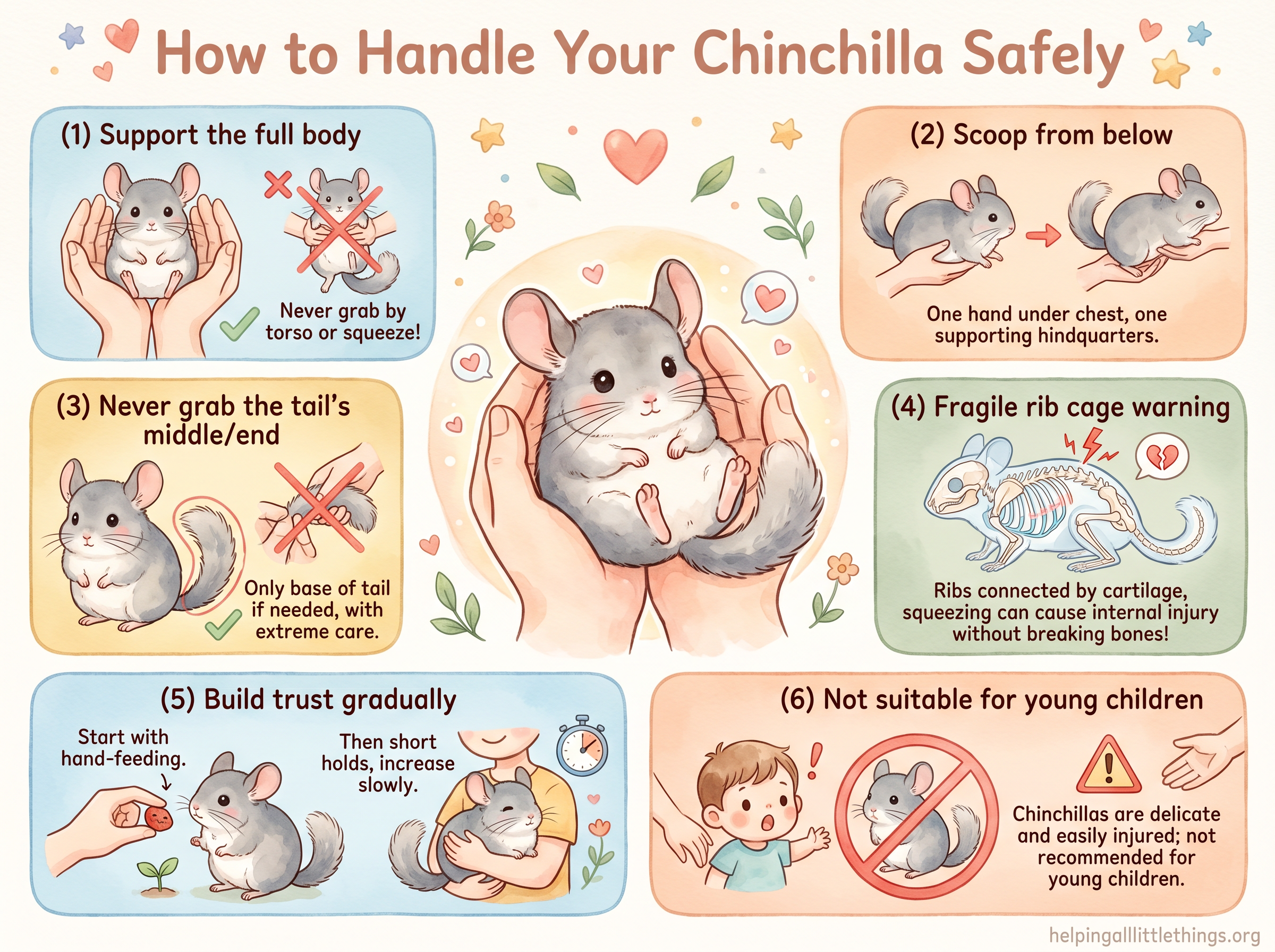

Chinchillas are prey animals with a naturally skittish and flighty demeanor. Building a bond based on trust through correct and gentle handling is essential for a positive relationship with your pet. Their delicate, floating rib cages also mean that improper handling can cause serious injury. [1]
This guide covers the best methods for taming, picking up, and holding your chinchilla safely.
Understanding Chinchilla Skeletal Fragility
A common misconception is that chinchillas have a "floating" rib cage. This is not anatomically accurate — chinchilla ribs do connect to the spine, as in all mammals. However, the sternum is very small, and the front of the ribs are connected to it primarily by cartilage and muscle rather than rigid bone. This makes the rib cage highly flexible and compressible.1
The practical consequence of this anatomy is significant:
- Squeezing or grabbing a chinchilla around the midsection can compress the spinal cord via the cervical and thoracic vertebrae, potentially causing neurological damage
- The ribs can be squeezed to the point of damaging the lungs without being broken — meaning there may be no obvious external sign of injury
- Internal organ damage from improper handling may not be immediately apparent
Because of their delicate skeletal structure, chinchillas are not recommended as pets for young children, particularly those who have not yet developed fine motor control. A child who grabs, squeezes, or drops a chinchilla can cause fatal internal injuries without realizing it.
If chinchillas are kept in a household with children, all handling must be supervised by an adult, and children should only handle the chinchilla while seated on the floor to minimize fall risk. Children should be taught the correct handling technique before any contact is permitted.
Building Trust: The Taming Process
Patience is the most important tool when taming a chinchilla. Never force interaction; let the chinchilla set the pace.
- Acclimation: Give a new chinchilla at least a week to settle into their new home before attempting to handle them. Sit by their cage and speak to them in a calm, soft voice.
- Treats as a Bridge: Offer healthy treats, like a single rolled oat or a dried rose hip, through the cage bars. Once they are comfortable with this, open the cage door and offer the treat from your flat palm. [2]
- The "Elevator" Game: Let your chinchilla willingly hop onto your hands. Gently raise and lower your hands inside the cage without taking them out. This teaches them that your hands are safe.
How to Pick Up a Chinchilla
Never chase your chinchilla around the cage. This is terrifying for them and will destroy any trust you have built.
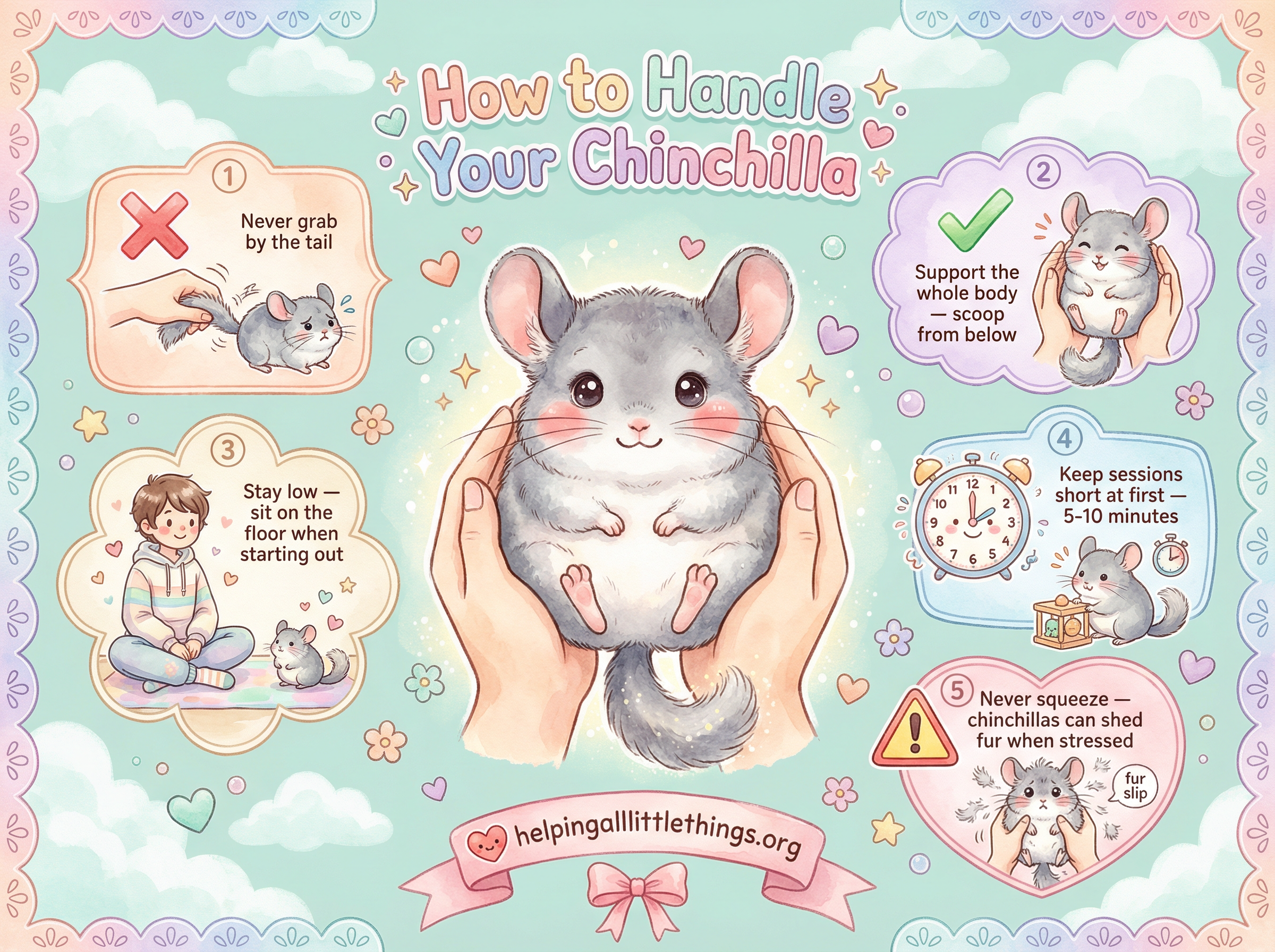
- The Correct Method: The safest and most secure way to pick up a chinchilla is to support their entire body. Place one hand under their chest/belly and use your other hand to support their hind legs and bottom. Hold them close to your body to make them feel secure. [3]
- The Tail Support Method: For quick transfers or to prevent a fall, you can firmly but gently grasp the base of the tail (closest to the body) while supporting their body with your other hand. The base of the tail is strong and connected to the spine. Never grab the middle or end of the tail. [4]
Crucial Safety Note: Never squeeze a chinchilla's body. Their rib cage is highly flexible due to small cartilaginous sternal connections, and compressing it can damage internal organs or compress the spinal cord without breaking any bones. This is why full-body support is so important.21
Holding and Cuddling
Most chinchillas are not naturally cuddly pets. They prefer to explore and may only tolerate being held for short periods. Respect their boundaries. Some chinchillas may enjoy sitting on your shoulder or lap, while others will not. The key is to learn your individual pet’s personality and comfort level.
Always supervise your chinchilla closely during out-of-cage playtime in a chinchilla-proofed room. Their curiosity and need to chew can get them into trouble quickly.

References