Satin Chinchillas and Satin Syndrome
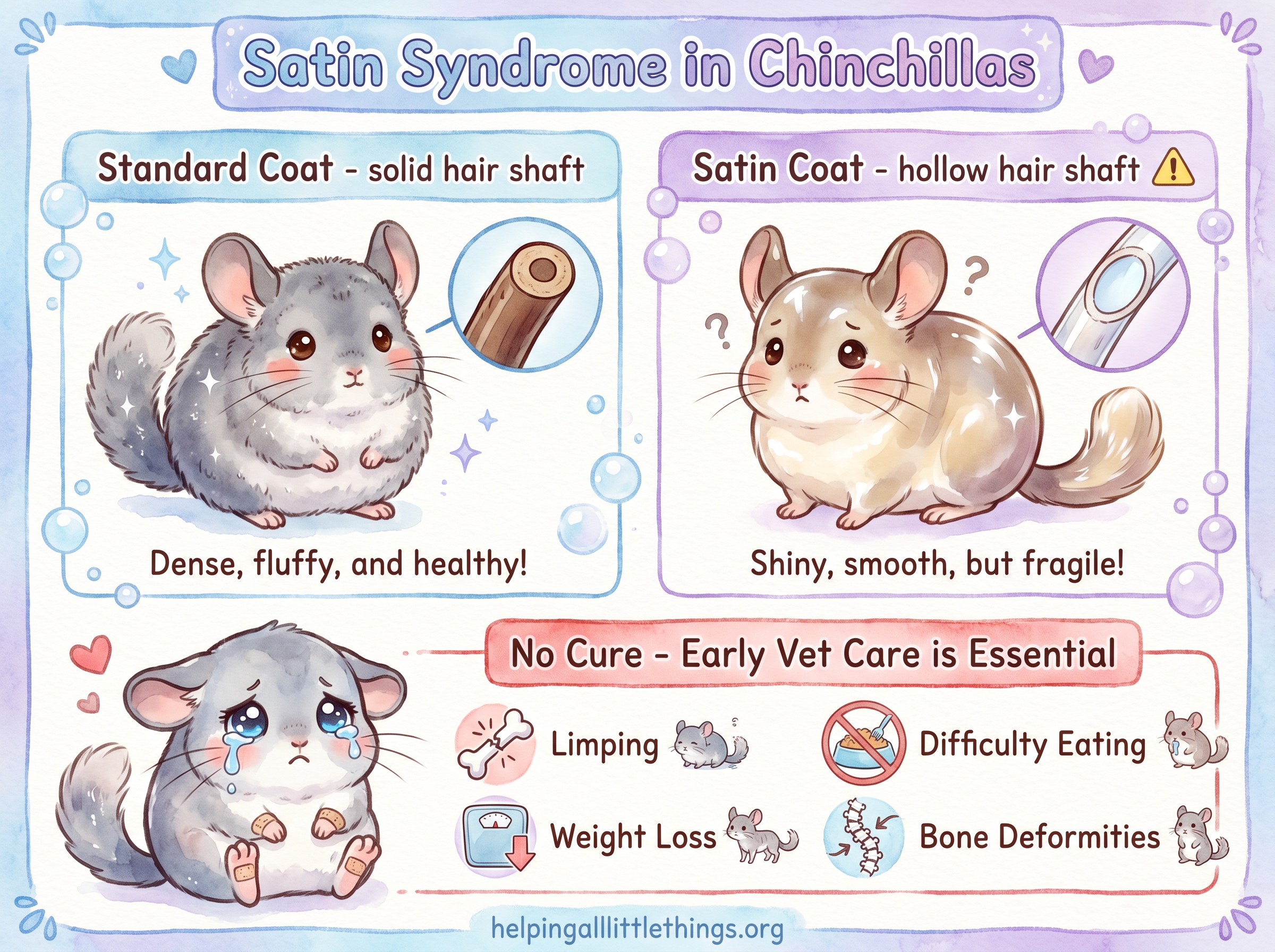
The satin gene produces one of the most visually striking coat variations in chinchillas — a coat so glossy and reflective that it appears almost metallic in direct light. However, this beautiful trait comes with a serious and incurable health condition known as satin syndrome, also called fibrous osteodystrophy. Any owner, rescuer, or adopter of a satin chinchilla must understand this condition in order to provide appropriate care.
Satin chinchillas should not be bred. The satin gene is linked to a progressive, incurable metabolic disease. Responsible rescue organizations and caregivers do not breed satin animals.
What Is the Satin Gene?
The satin gene causes the hair shaft to be hollow rather than solid. In a standard chinchilla, the hair shaft is filled with a dense medullary core that gives the coat its characteristic soft, dense appearance. In a satin chinchilla, this core is absent or greatly reduced, leaving the shaft translucent. Light passes through and reflects off the inner surface, producing the characteristic high-gloss sheen.1
The satin trait is caused by a recessive gene. A chinchilla must inherit two copies of the satin allele (one from each parent) to display the full satin coat. Chinchillas with only one copy of the gene (carriers) may show a slightly shinier coat than standard animals but do not display the full satin phenotype.1
Identifying a Satin Chinchilla
Satin chinchillas are visually distinctive once you know what to look for. The coat has an intense, almost wet-looking gloss that is immediately apparent in good lighting. The fur may appear slightly thinner or less dense than a standard chinchilla's coat, and the individual hairs may look slightly limp or flat compared to the characteristic upright, dense pile of a standard coat.
The most reliable confirmation is microscopic examination of a hair shaft, which will show the hollow interior characteristic of the satin gene. However, experienced chinchilla owners and rescuers can usually identify satin animals visually without laboratory confirmation.1
Satin Syndrome: The Health Consequences
The hollow hair shaft that gives satin chinchillas their beautiful coat is also the root cause of a serious metabolic disease. The exact mechanism is not fully understood, but research strongly suggests that the hollow hair shaft impairs the chinchilla's ability to absorb calcium properly, leading to a cascade of health problems.2
The condition is formally known as fibrous osteodystrophy — a disease in which the body, unable to maintain adequate calcium levels in the bones, begins replacing bone tissue with fibrous connective tissue. This results in bones that are progressively weakened, deformed, and prone to fracture.2
"Fibrous osteodystrophy, also known as Satin Syndrome, is a condition caused by hyperparathyroidism. It is seen in virtually every species, but in guinea pigs and chinchillas it is associated with the satin gene."
— VIN Veterinary Partner3
The disease affects not only the skeleton but also the kidneys, heart, and parathyroid glands. As the body attempts to compensate for poor calcium absorption, the parathyroid glands become overactive (hyperparathyroidism), which in turn causes further damage to multiple organ systems.3
Signs and Symptoms
Satin syndrome typically becomes apparent between 1 and 3 years of age, though some animals show signs earlier or later. Because chinchillas are prey animals and naturally hide signs of illness, the disease is often well advanced before owners notice symptoms.
| Sign | Description |
|---|---|
| Abnormal gait | Hopping, limping, or dragging of one or more limbs |
| Reluctance to move | Spending more time sitting still; less active than usual |
| Difficulty eating | Preference for soft foods; dropping food; weight loss |
| Bone deformities | Visible changes in limb shape, particularly the spine and legs |
| Increased thirst and urination | Sign of kidney involvement |
| Lethargy | General reduction in energy and interest in surroundings |
| Dental problems | Malocclusion, drooling, difficulty chewing |
If you notice any of these signs in a satin chinchilla, contact an exotic animal veterinarian promptly. Early intervention can improve quality of life, even though the disease cannot be cured.2
Diagnosis
Satin syndrome is typically diagnosed through a combination of physical examination, X-rays, and bloodwork. X-rays are the most informative tool, revealing reduced bone density, deformities, and fractures. Bloodwork may show elevated parathyroid hormone levels and abnormal calcium/phosphorus ratios. Microscopic examination of a hair shaft can confirm the satin genotype.3
Management and Care
There is no cure for satin syndrome. Management focuses on maintaining quality of life and slowing the progression of the disease.
Veterinary care typically includes pain management with NSAIDs or other appropriate medications, and in some cases calcium supplementation — though this must be carefully managed under veterinary supervision, as inappropriate supplementation can cause bladder stones and other complications. Soft, deep bedding such as fleece helps protect fragile bones from impact injuries. Ramps should replace any steep climbs in the enclosure, and food and water should be positioned for easy access.2
Regular veterinary check-ups — at least every 3–6 months for a diagnosed satin chinchilla — allow the veterinarian to monitor disease progression and adjust the management plan accordingly.
As the disease progresses, some satin chinchillas reach a point where their quality of life is severely compromised. Humane euthanasia is a compassionate option when pain can no longer be adequately managed. This is a difficult decision, but it is one of the most important acts of care an owner can provide.2
A Note on Satin Guinea Pigs
The satin gene and its associated health consequences are not unique to chinchillas. Guinea pigs also have a satin variety, and satin guinea pigs are affected by the same condition — fibrous osteodystrophy — through the same mechanism. For more information, see our Satin Syndrome in Guinea Pigs article.